Loopyard Feature
Multiplayer by default
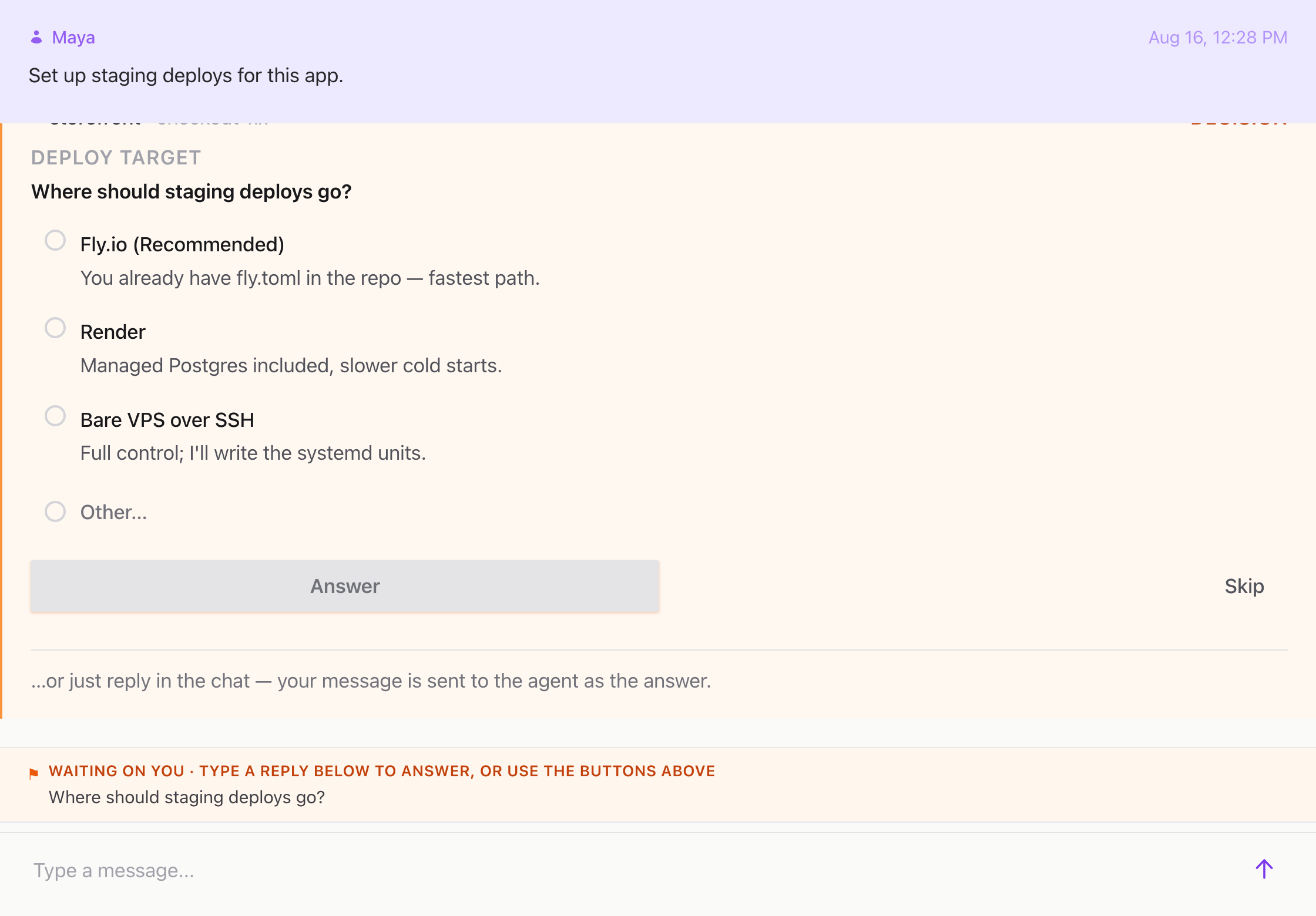
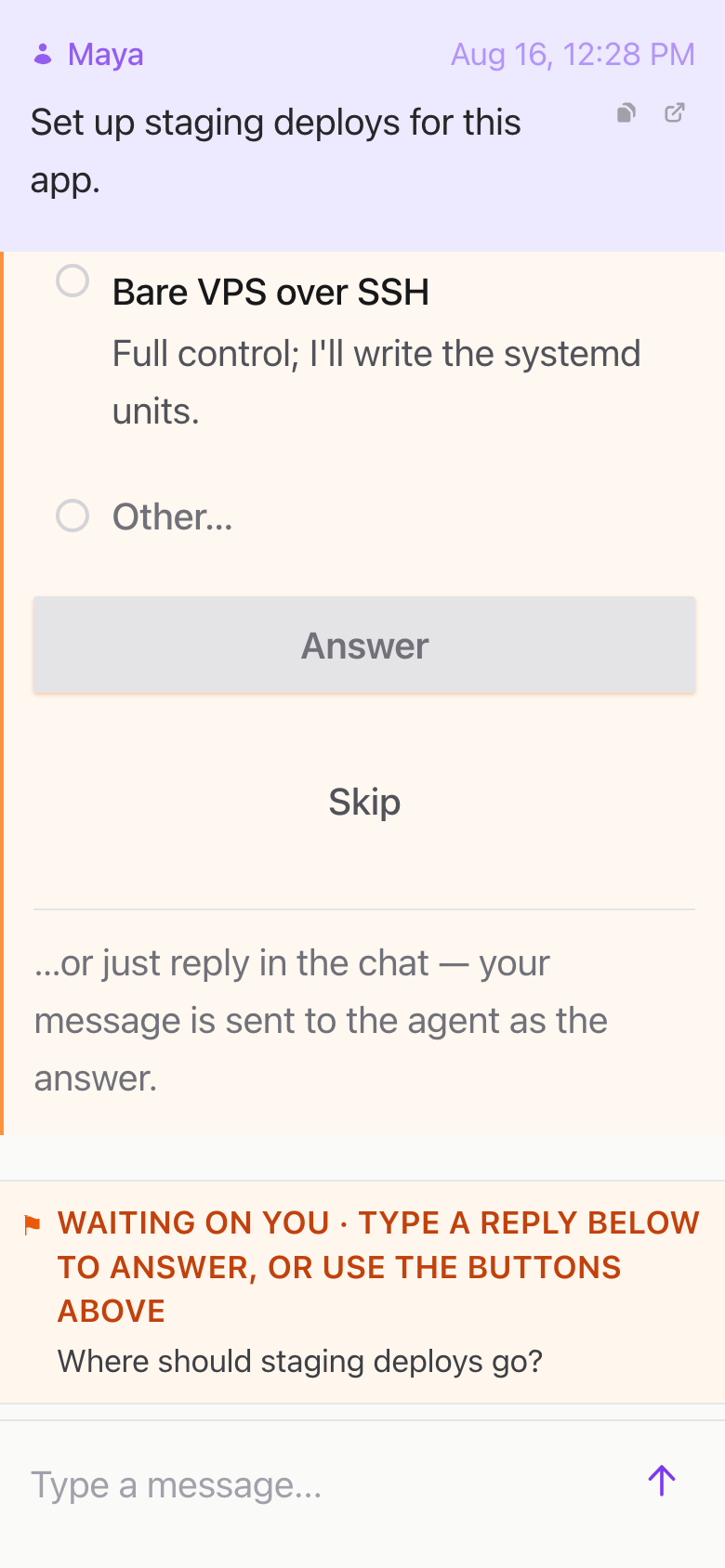
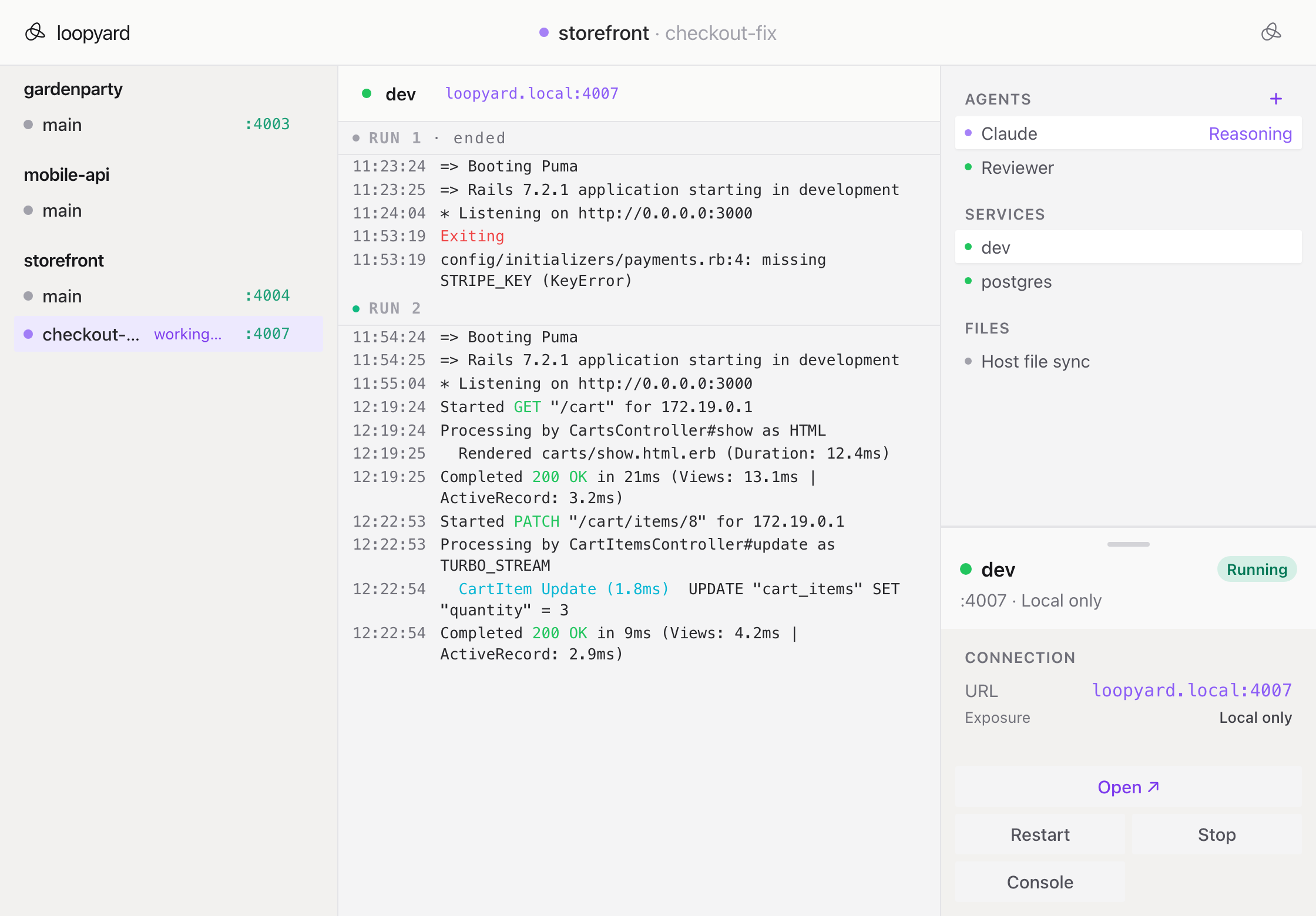
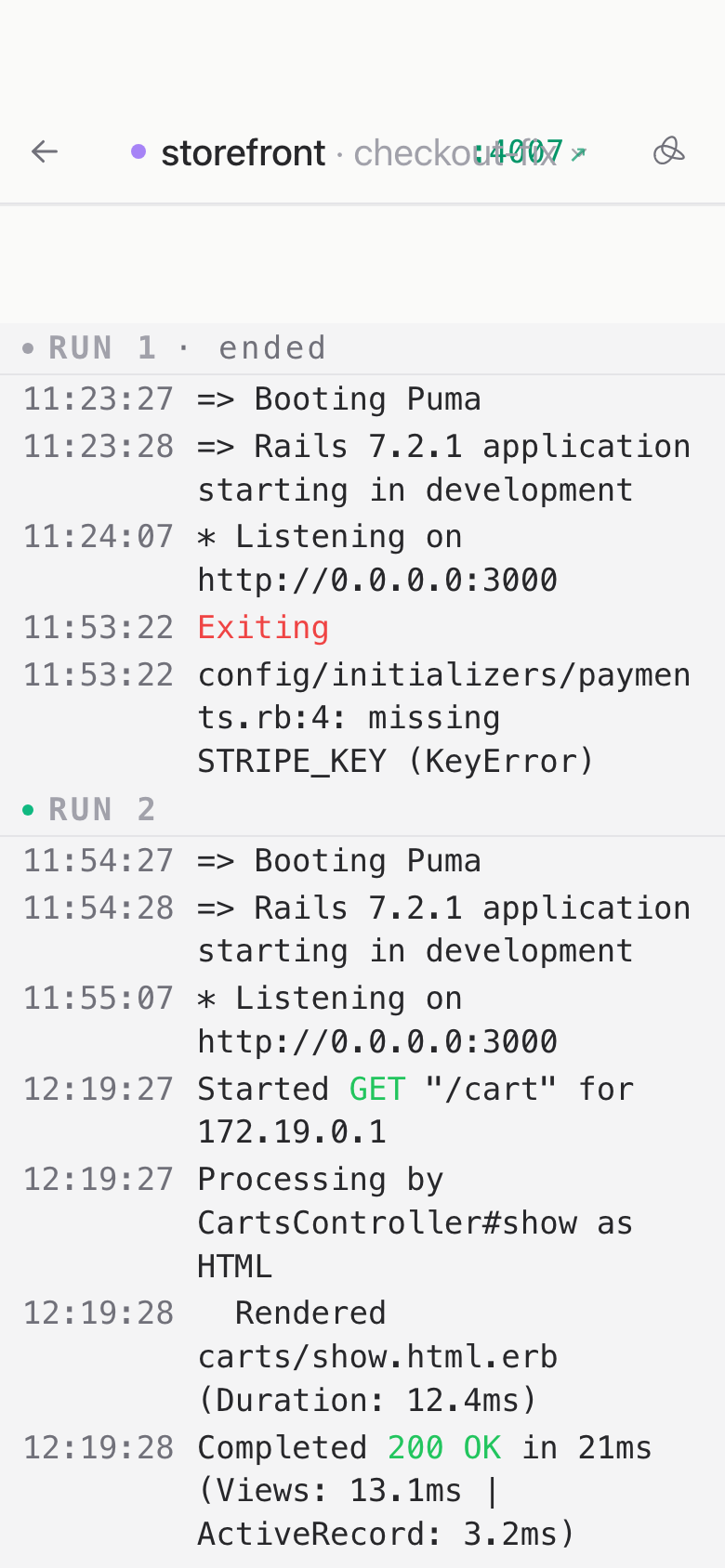
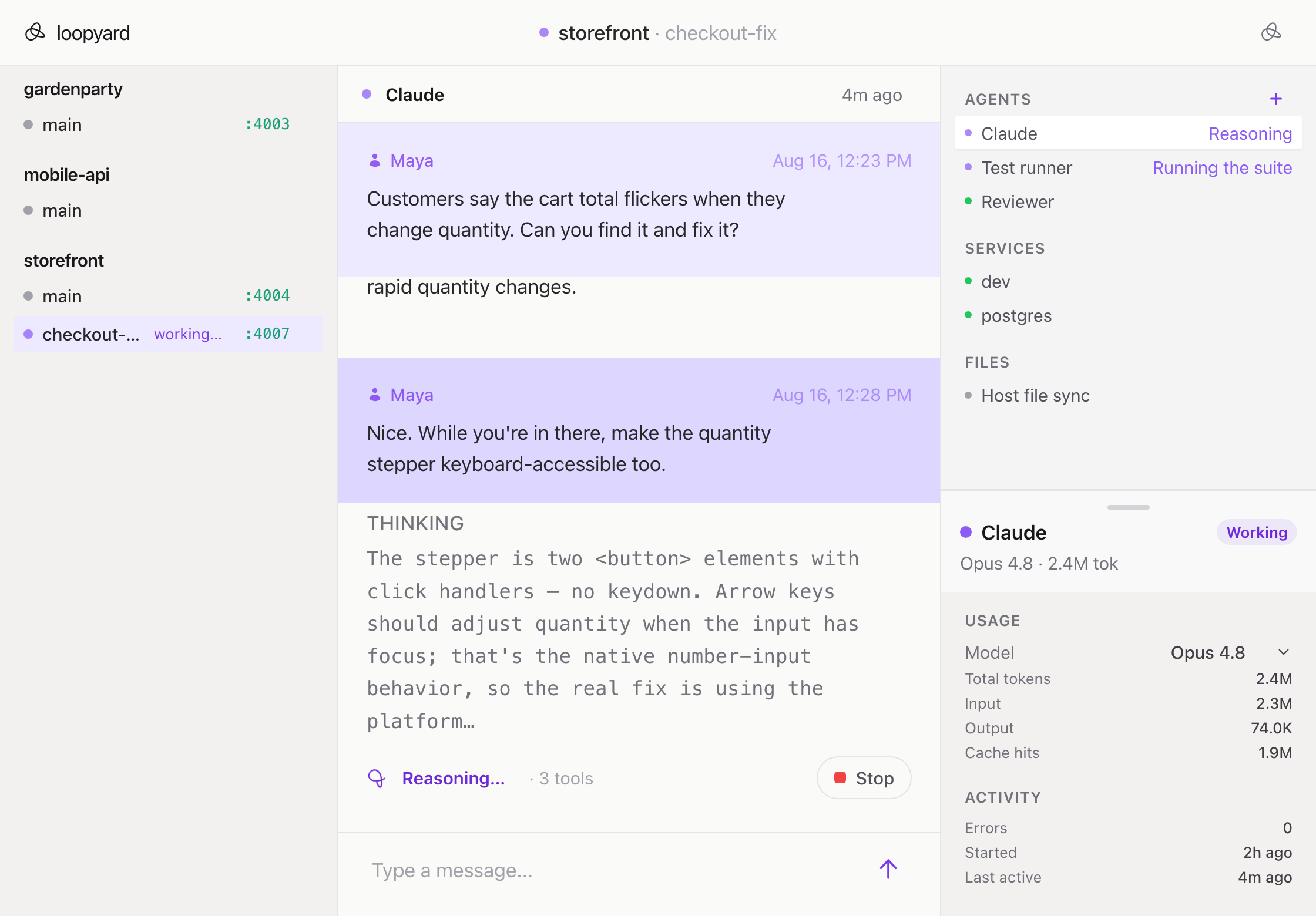
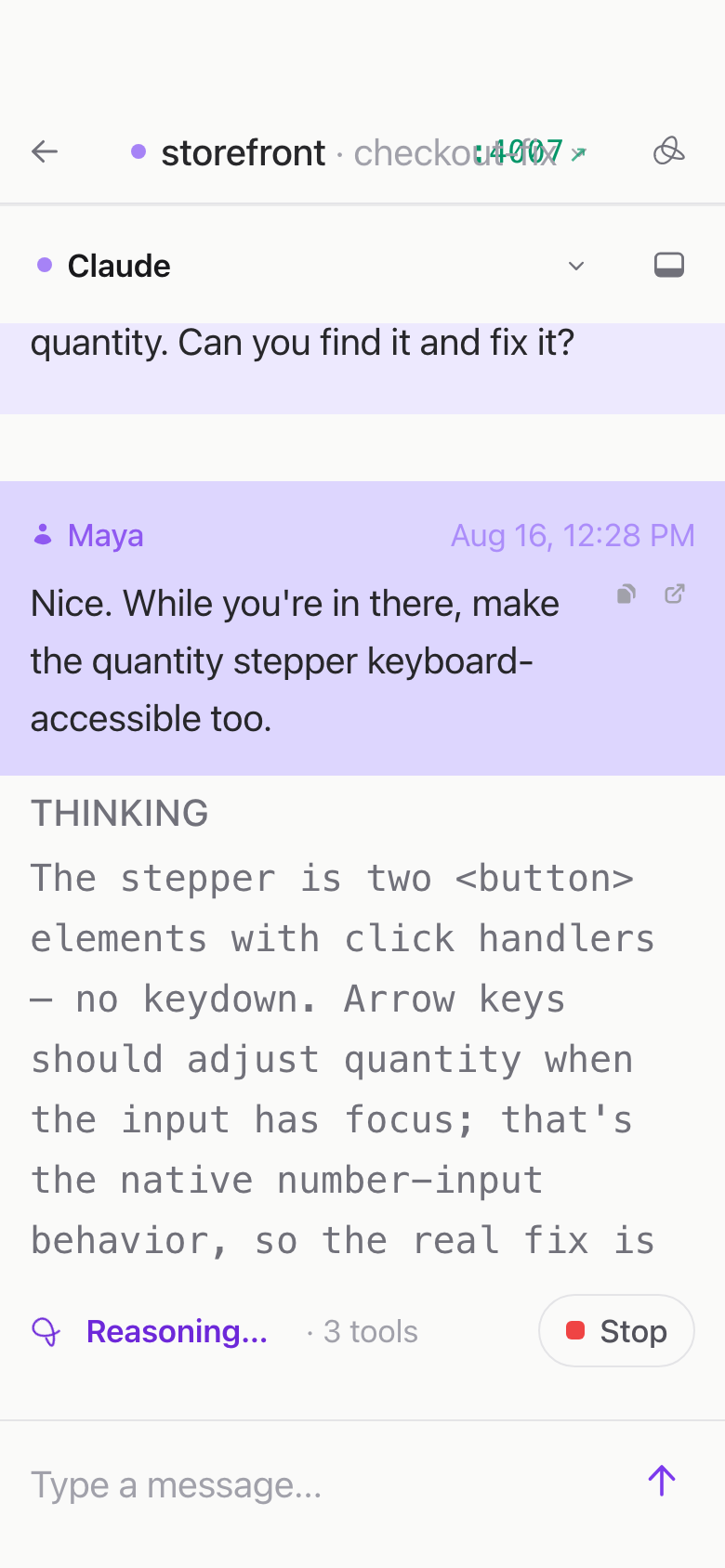
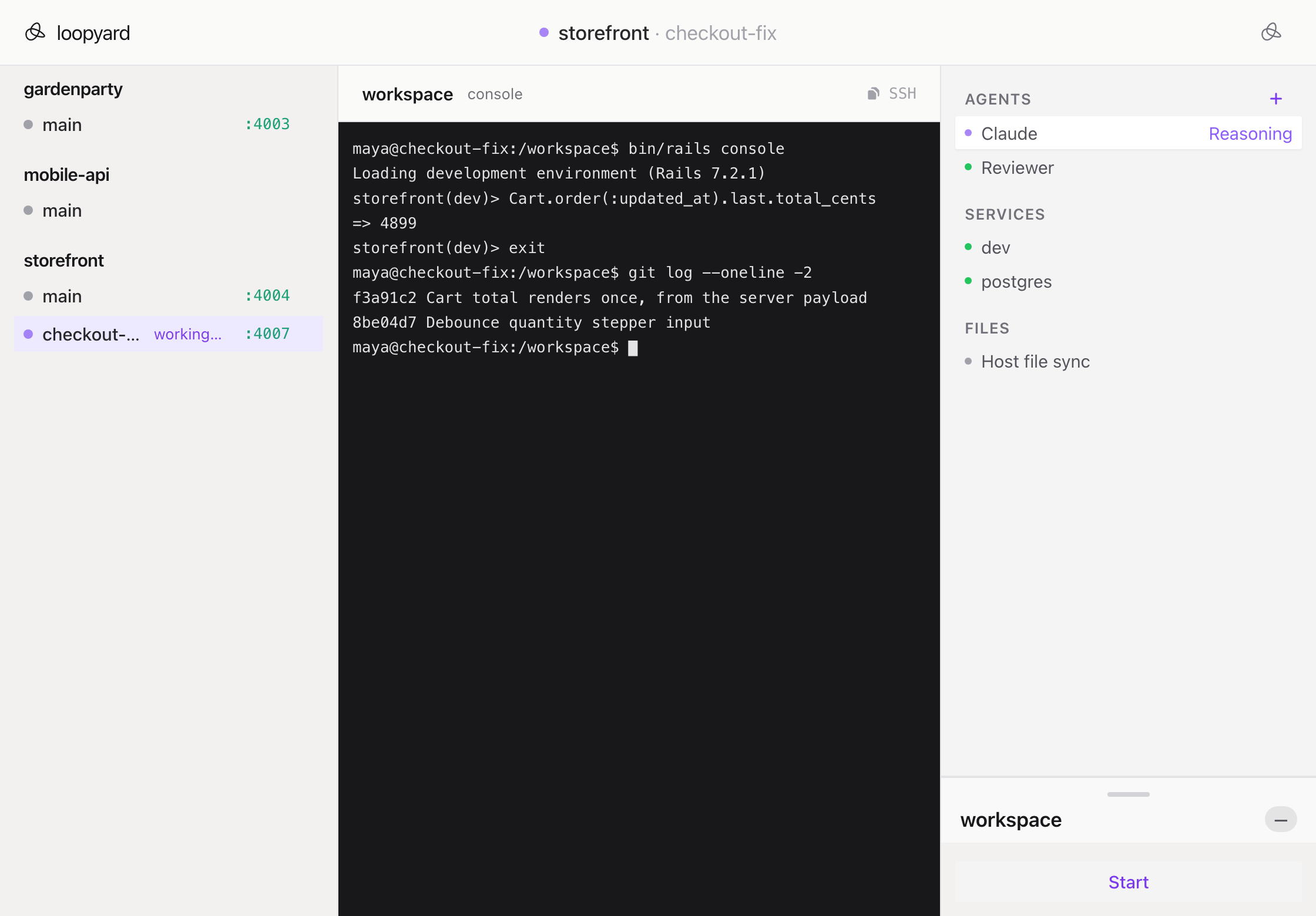
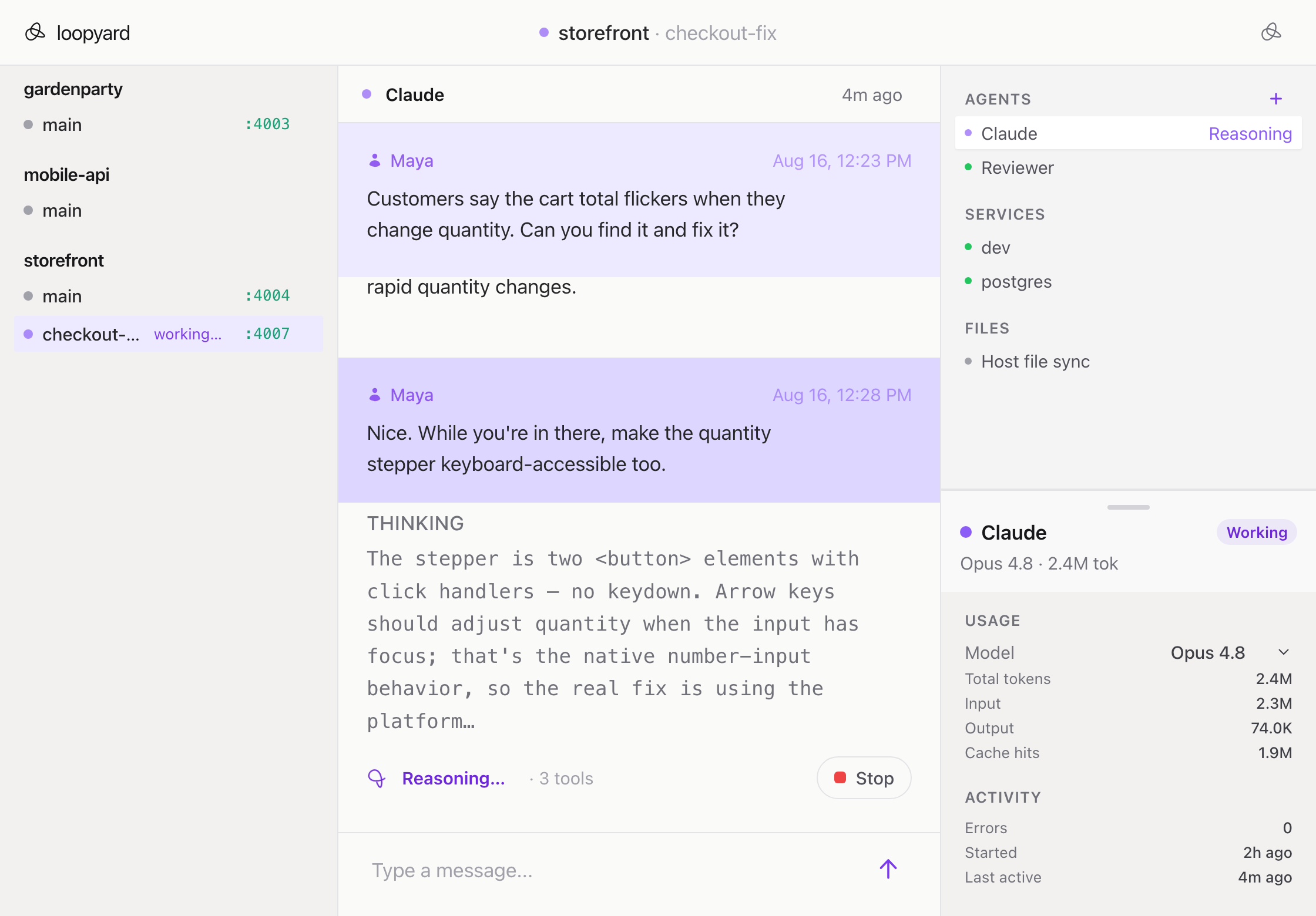
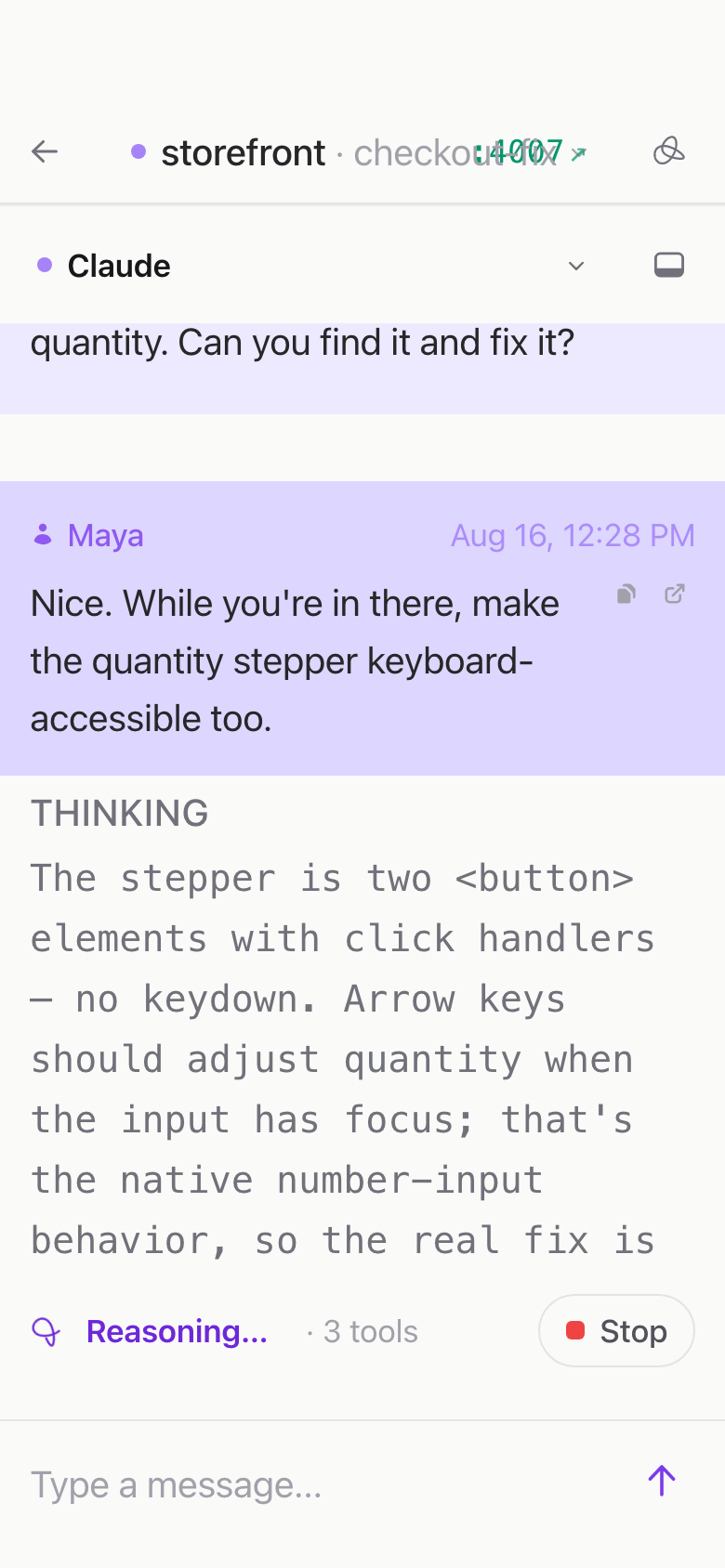
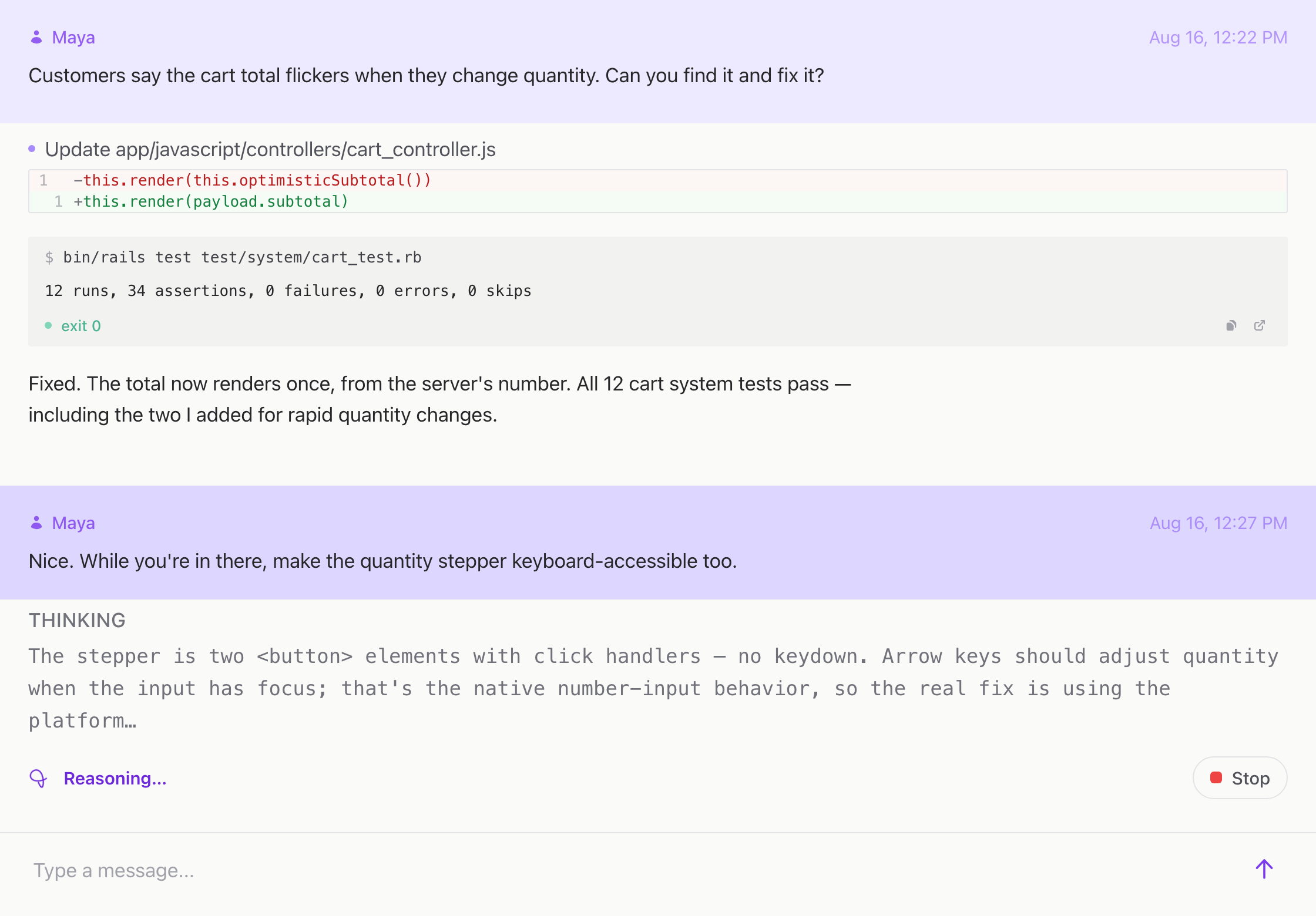
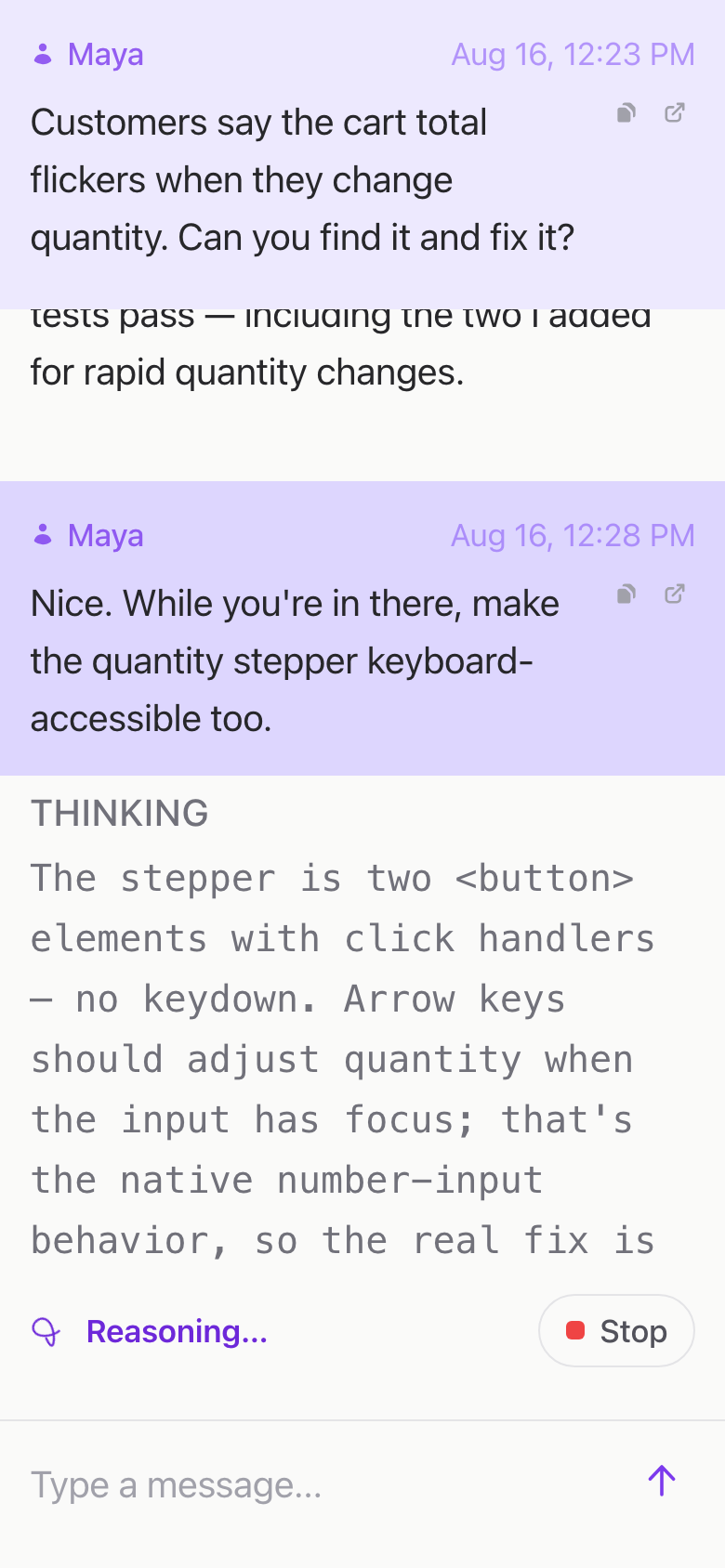
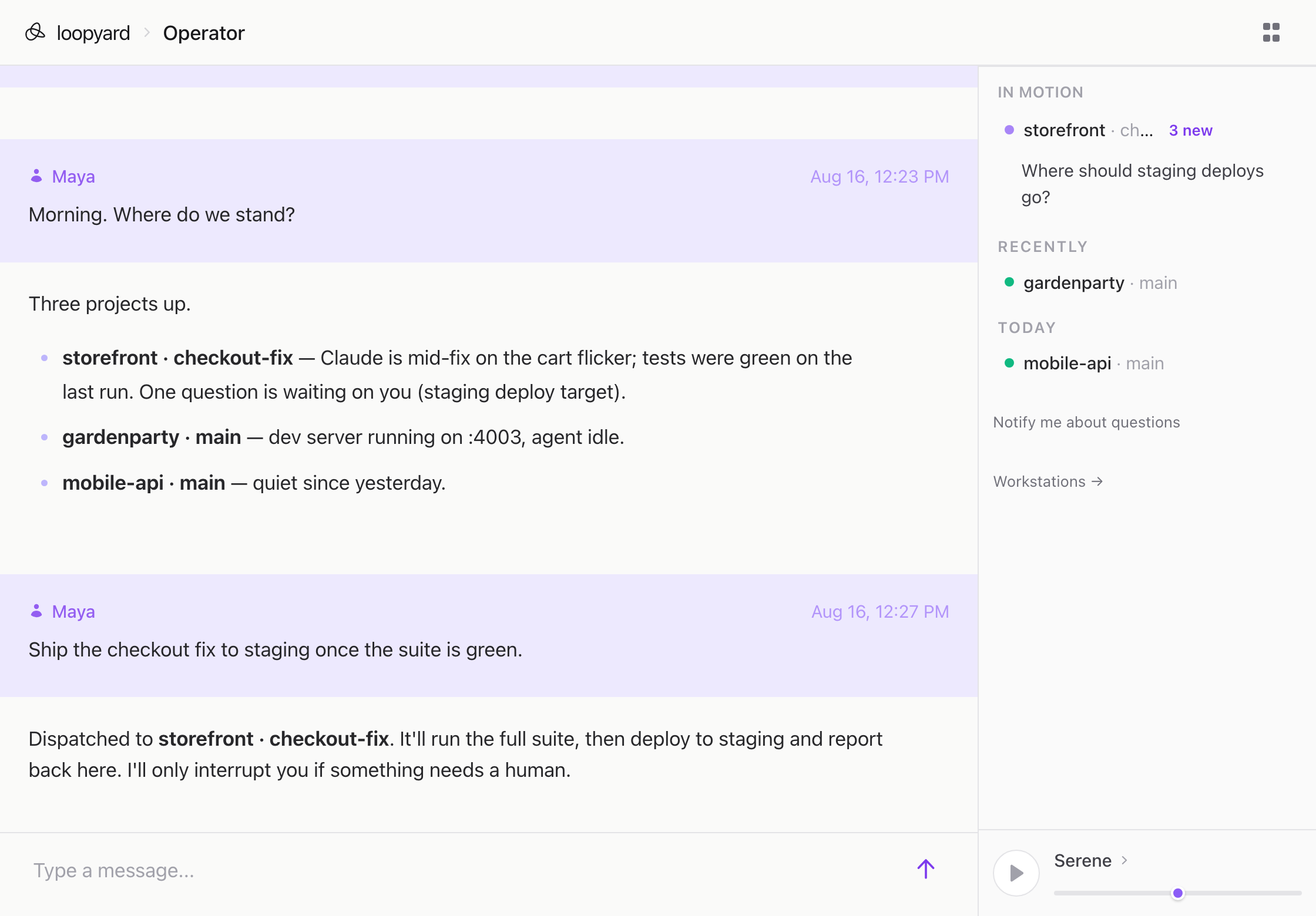
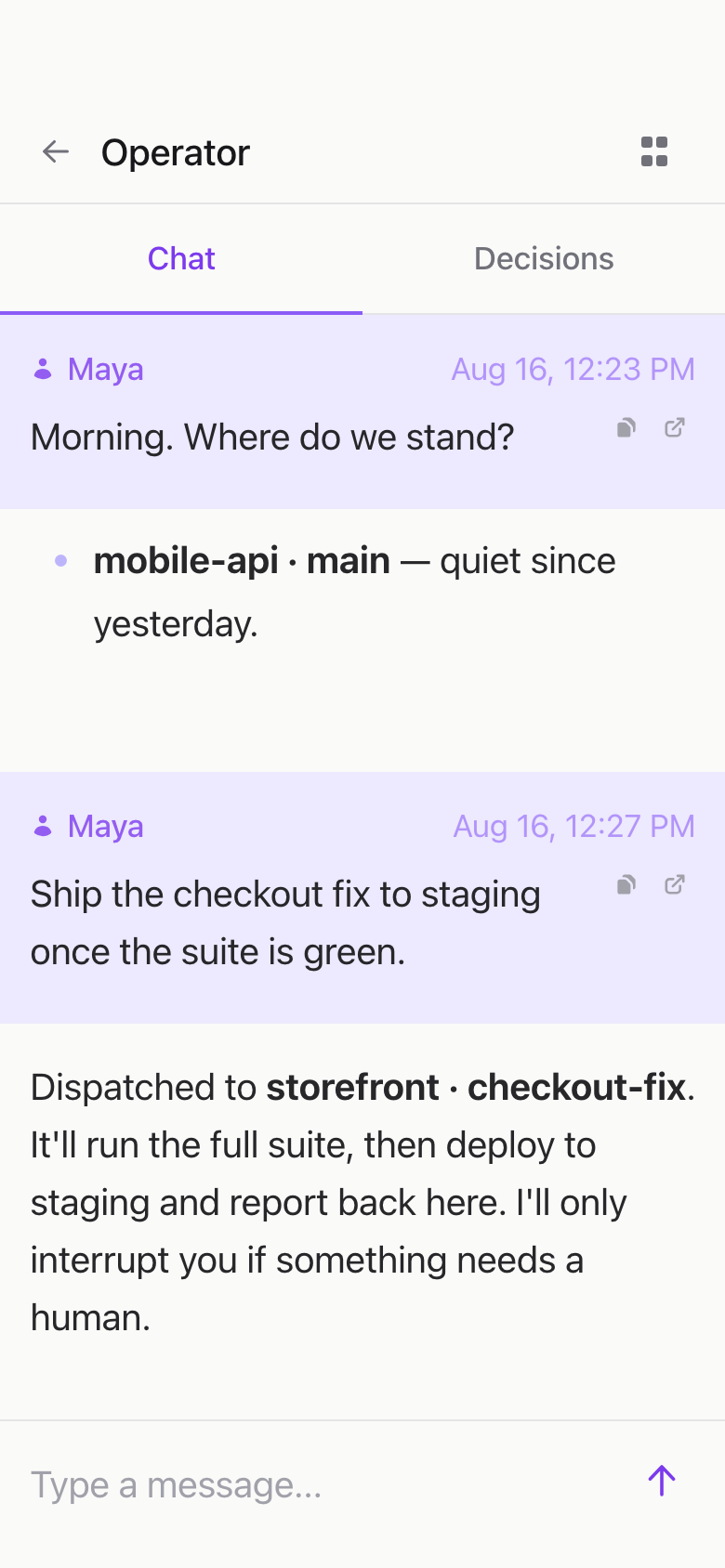
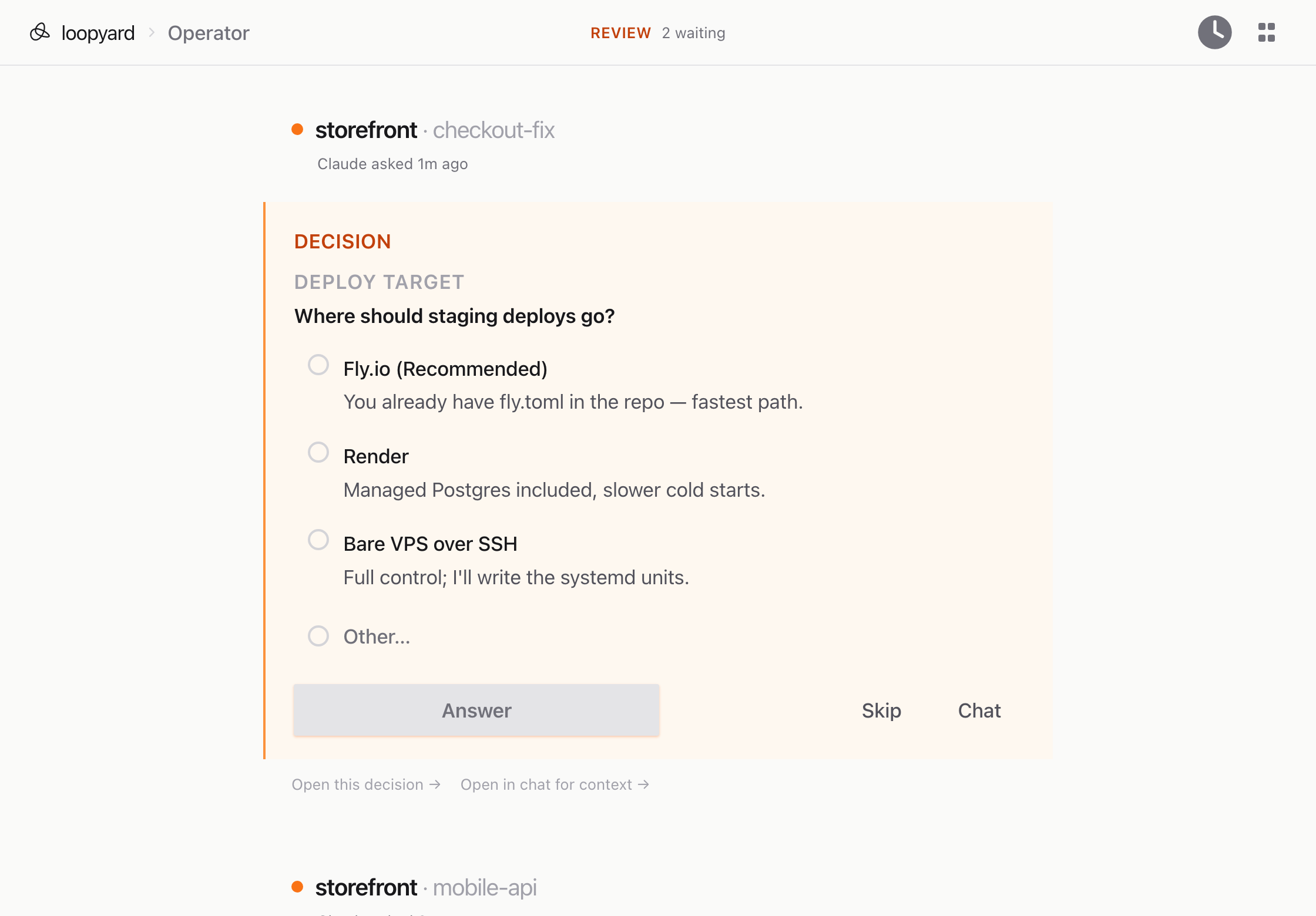
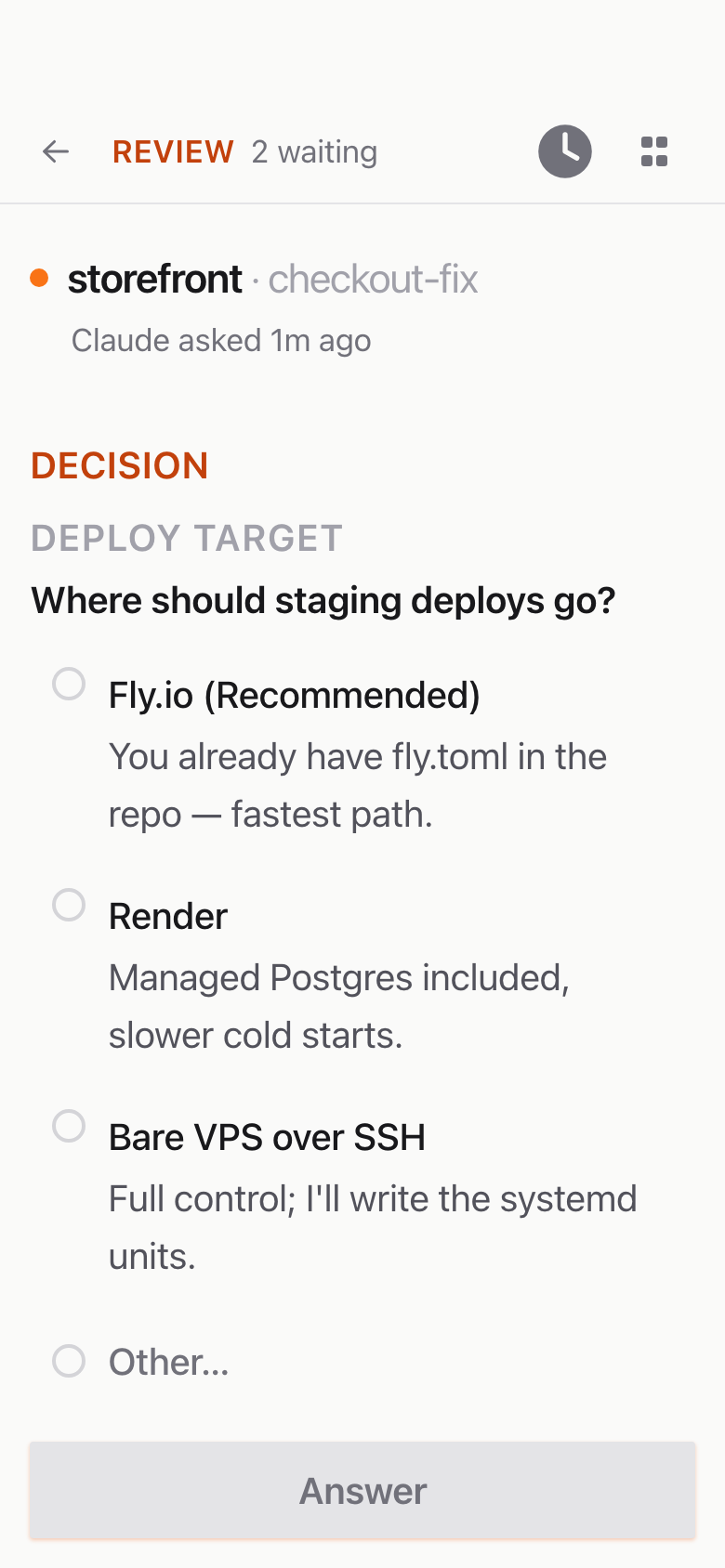
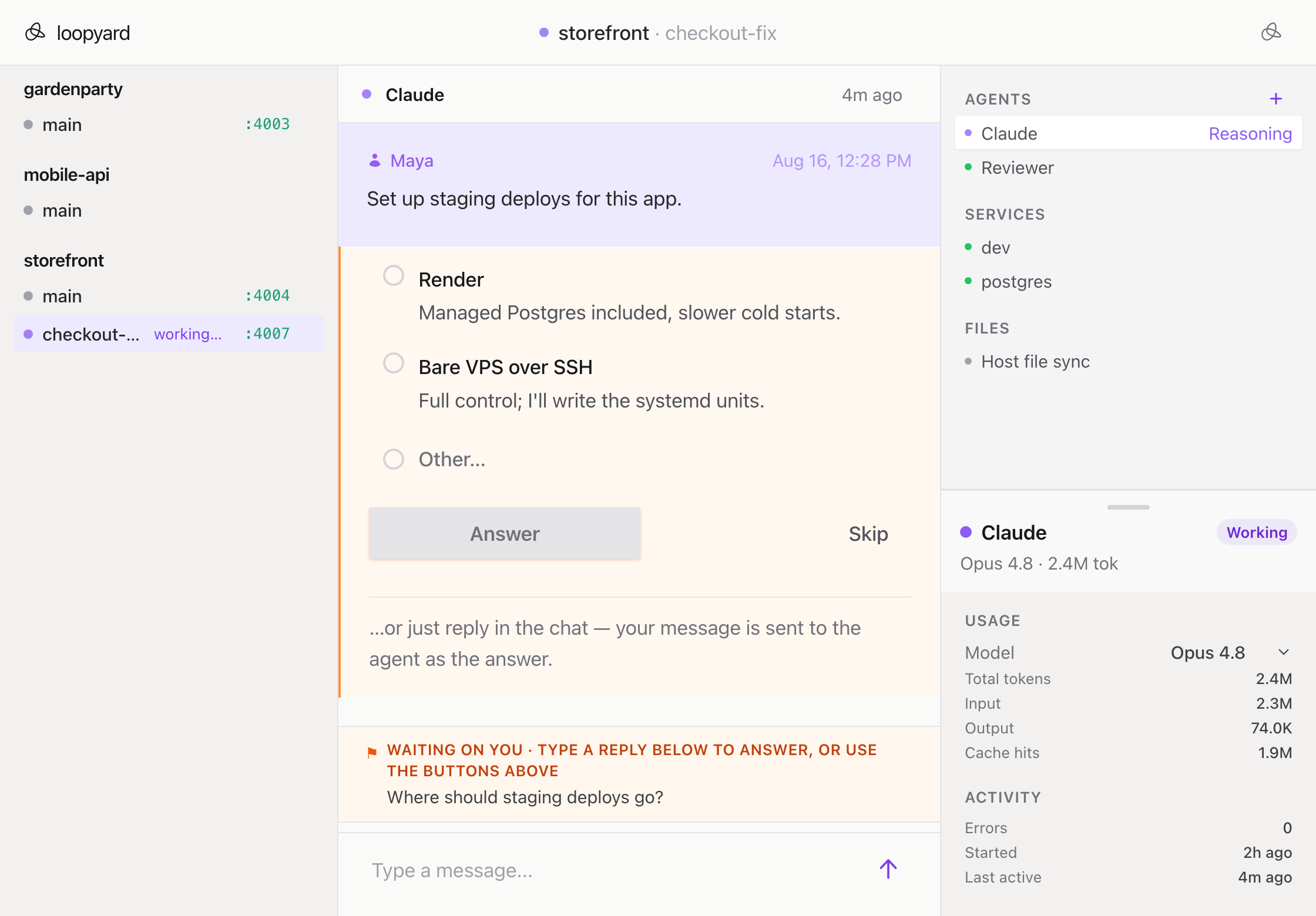
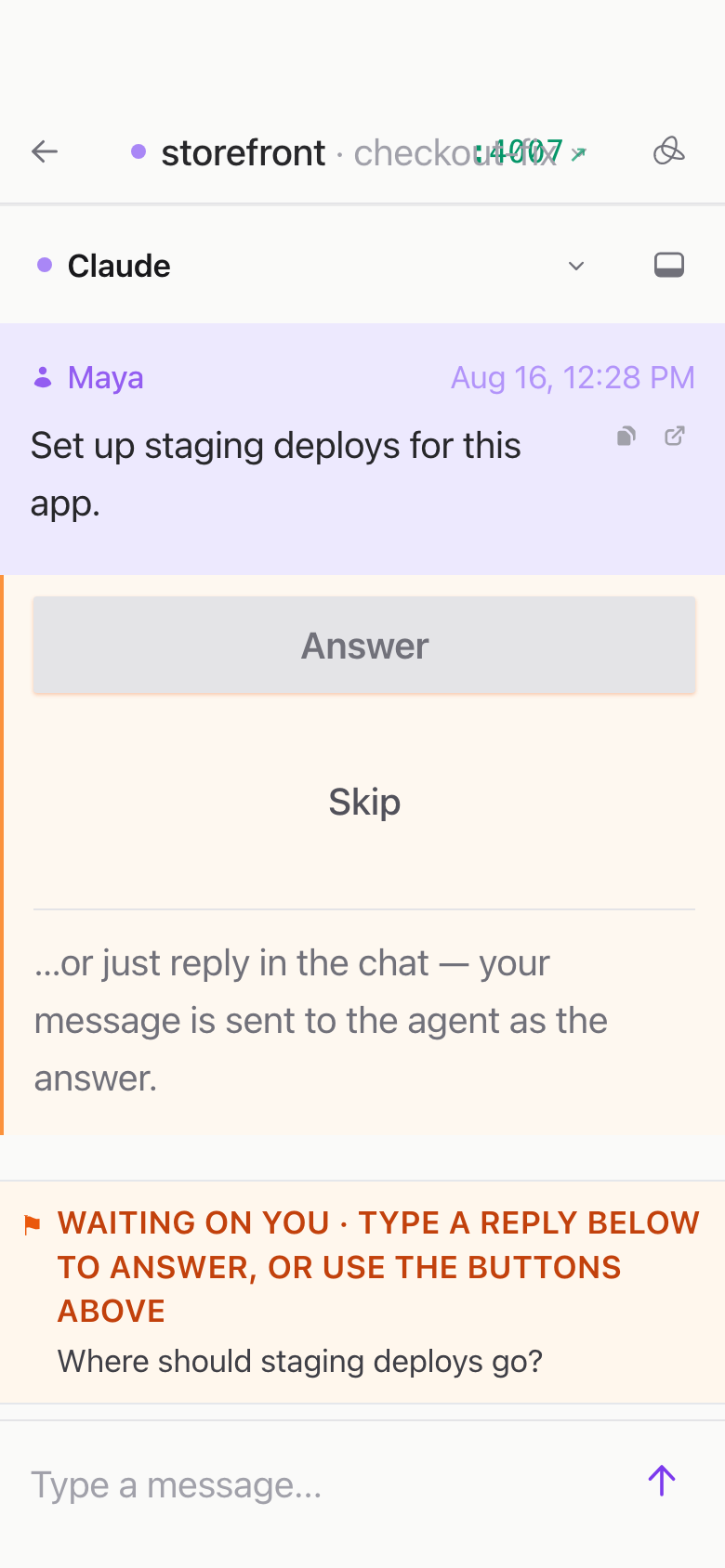
Every chat, terminal, and log has a URL. Send it. Open it on three devices. Watch live.
Pair programming used to mean one keyboard and one chair. Then it meant sharing a screen and reading aloud. Both are slow. Both don’t scale past two people. Both rely on the host being awake.
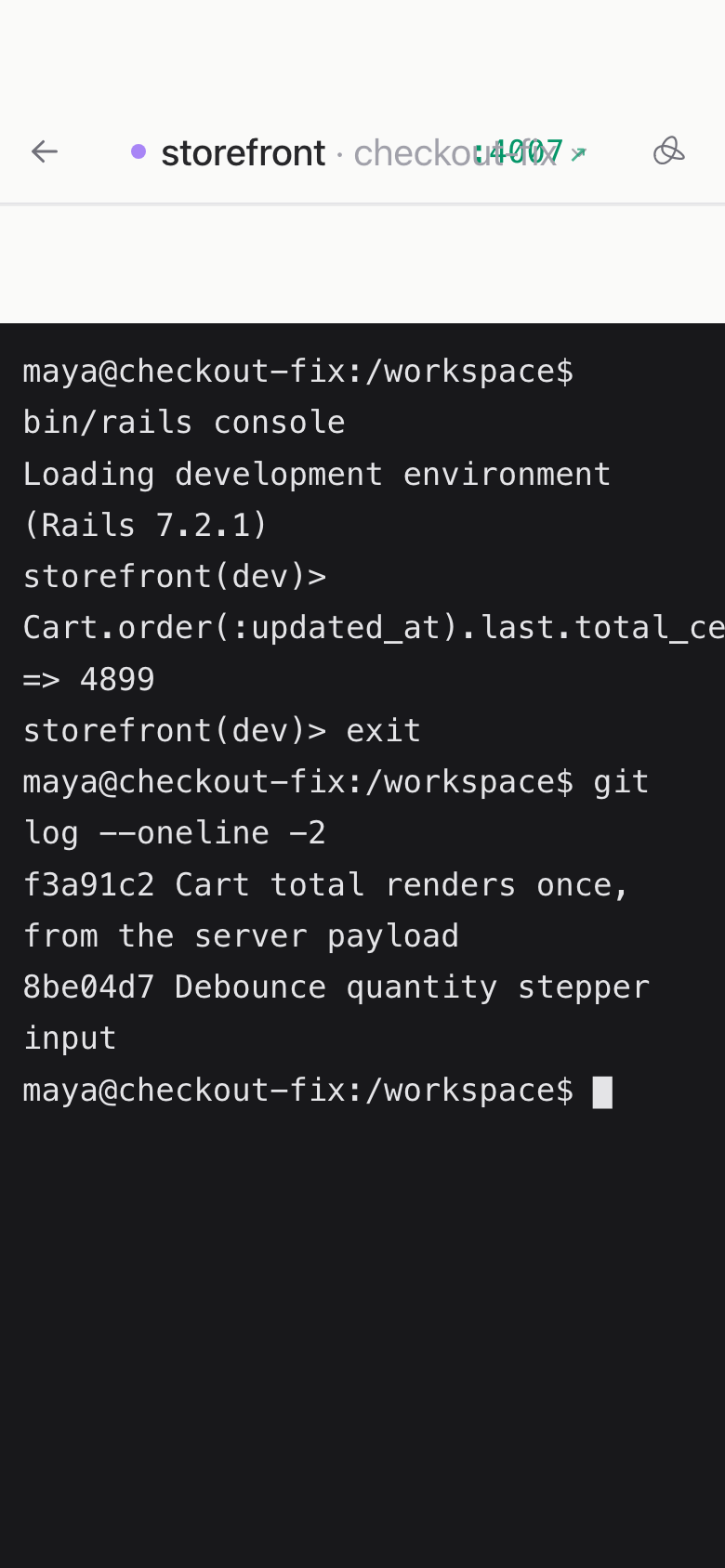
Loopyard makes the agent itself the shared surface. Every chat, every terminal session, every service log has its own URL. Send a link to a teammate and they’re watching the same agent solve the same problem. They can type into the same chat, hit the same terminal, scroll the same log stream. Three people can watch a flaky test get debugged at the same time; five people can sit in on a setup run.
The cursor isn’t yours, the connection isn’t a screen share. It’s the real thing, served to everyone live. State stays consistent because the agent owns it. Close your laptop and the session keeps running; another person or another device picks up where the cursor was.
There’s no “host” and no “guest.” There’s a project, a URL, and whoever’s in the room.
More features
-
Zero-config project setup
Clone, launch, work. The setup agent inspects the repo and stands up everything the project needs.
Read more
-
Full Docker stack per project
Each project gets its own Docker Compose. Isolated, reproducible, and gone when you stop it.
Read more
-
Multiple agents per project
One project, several agents working in parallel. Each in its own session, each visible.
Read more
-
SSH into any container
ssh -p 2222 container-name@localhost. Same session the agent is in. Same shell, same prompt.
Read more
-
Works from any device
Every session is a URL. Every URL works on every device. The agent doesn't care which one is in front of you.
Read more
-
Persistent containers
A project keeps running between sessions. Come back tomorrow, the dev server is already up.
Read more