Loopyard Feature
Multiple agents per project
Run setup, feature work, and a debugger on the same codebase at the same time.
A real codebase doesn’t have one job in flight. There’s a feature being written, a bug being chased, a migration being prepped, a test suite being hardened. Doing all of that with one agent means a queue. Doing it with four agents on four laptops means four laptops.
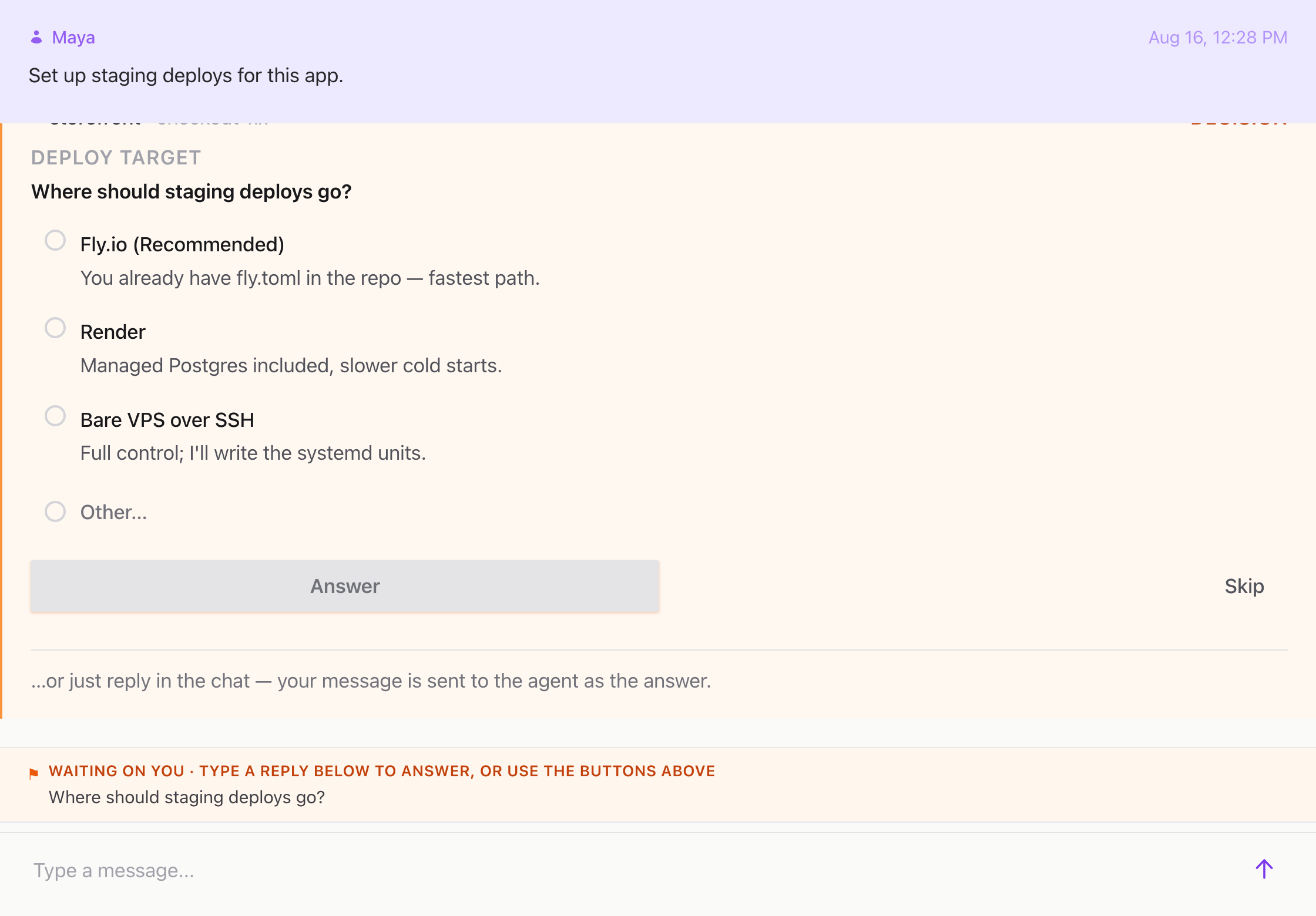
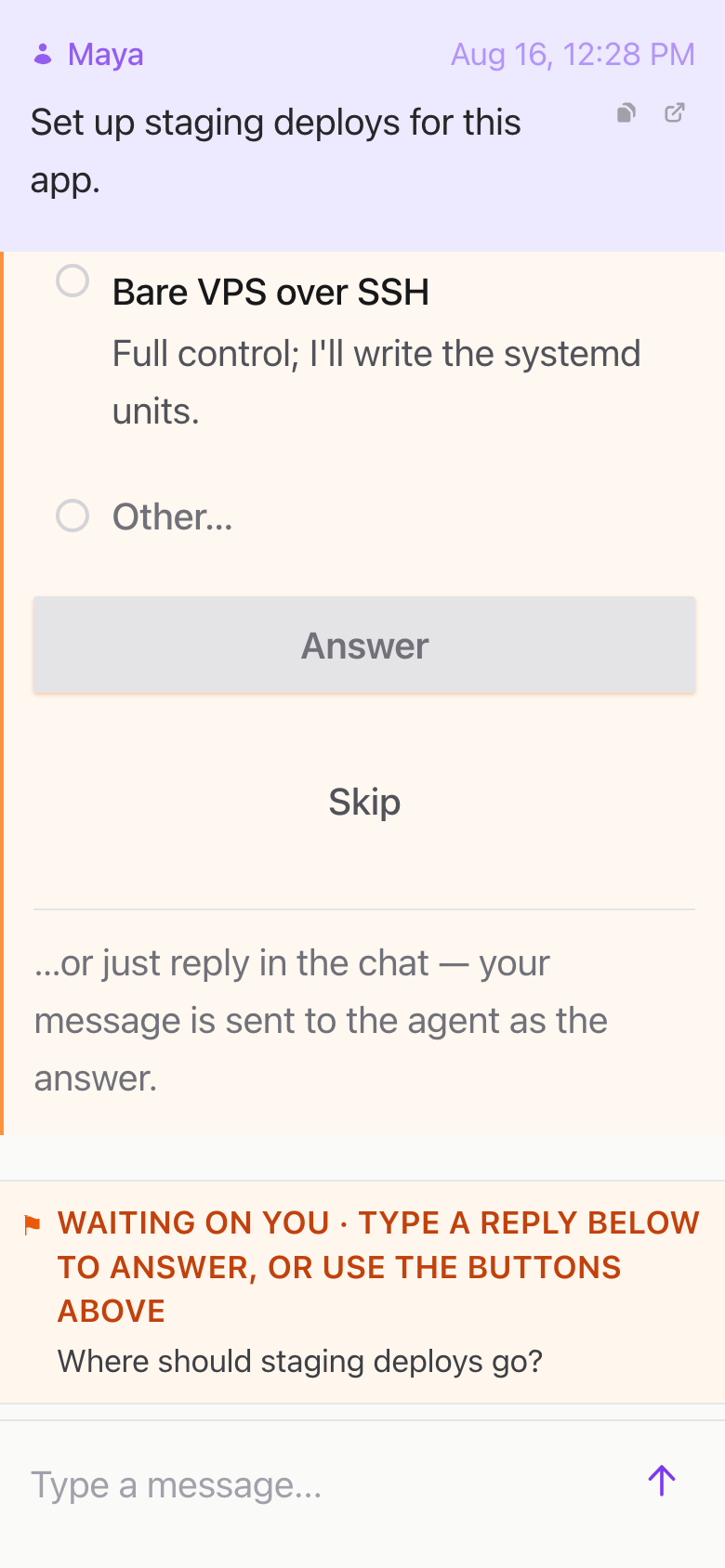
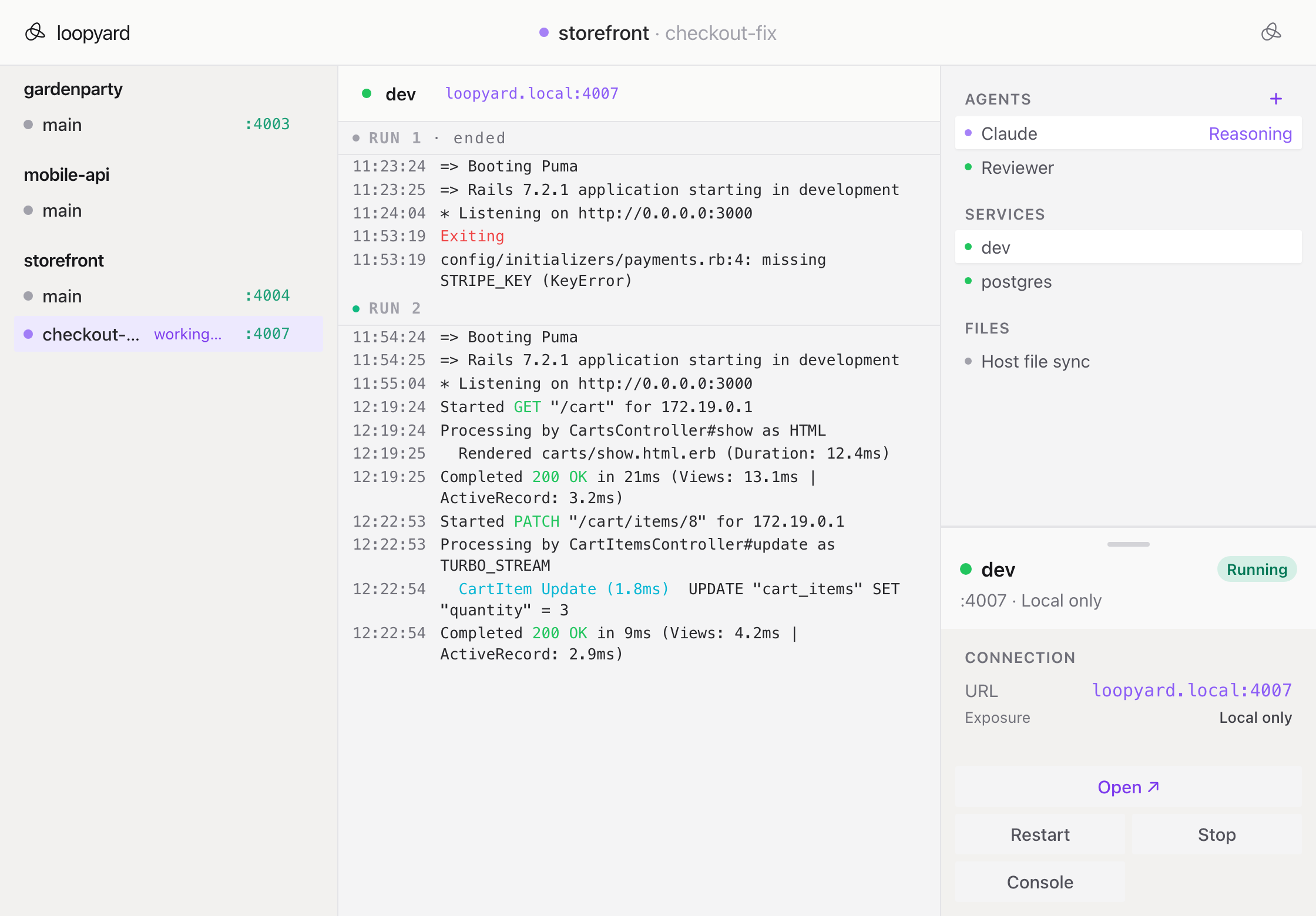
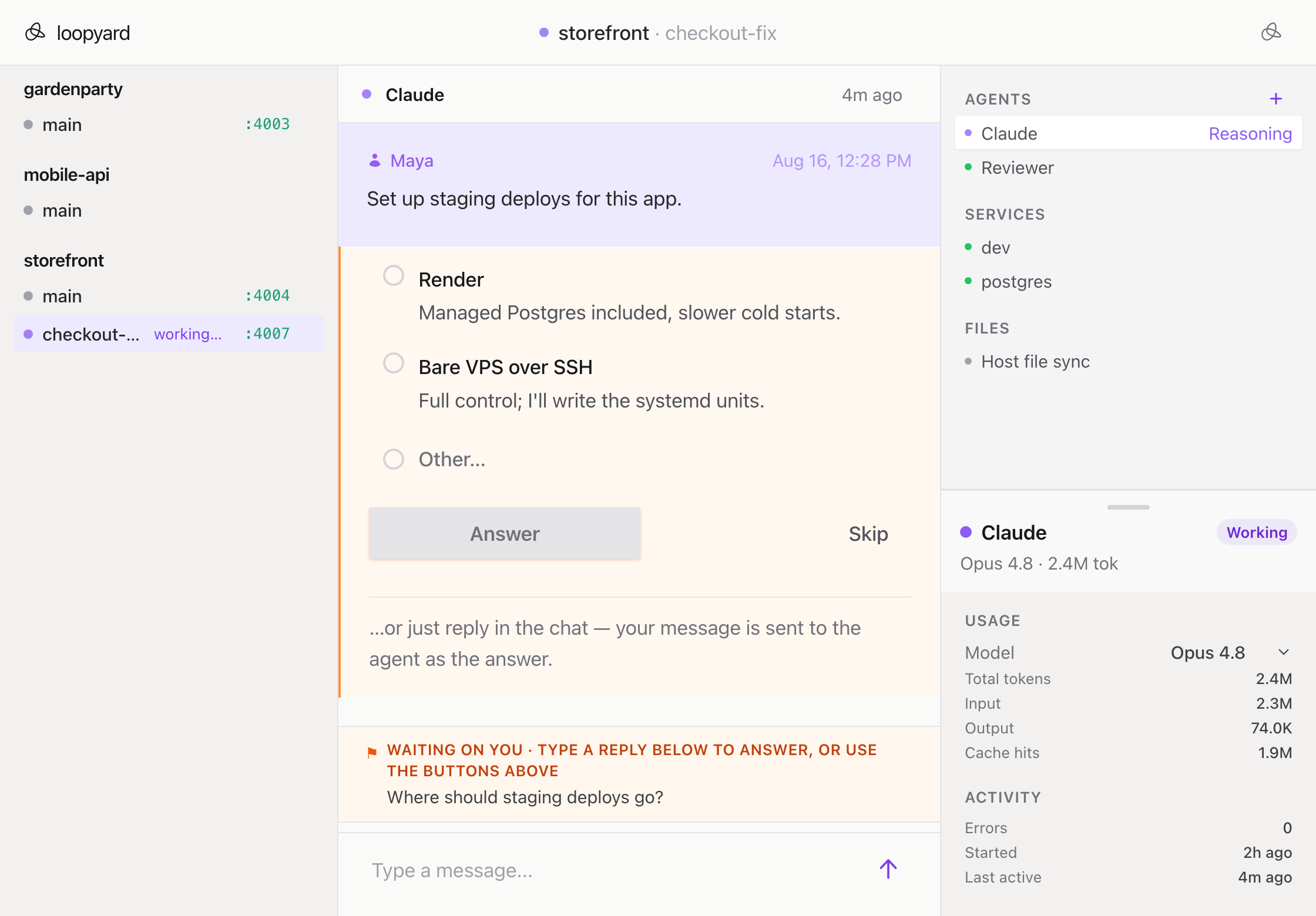
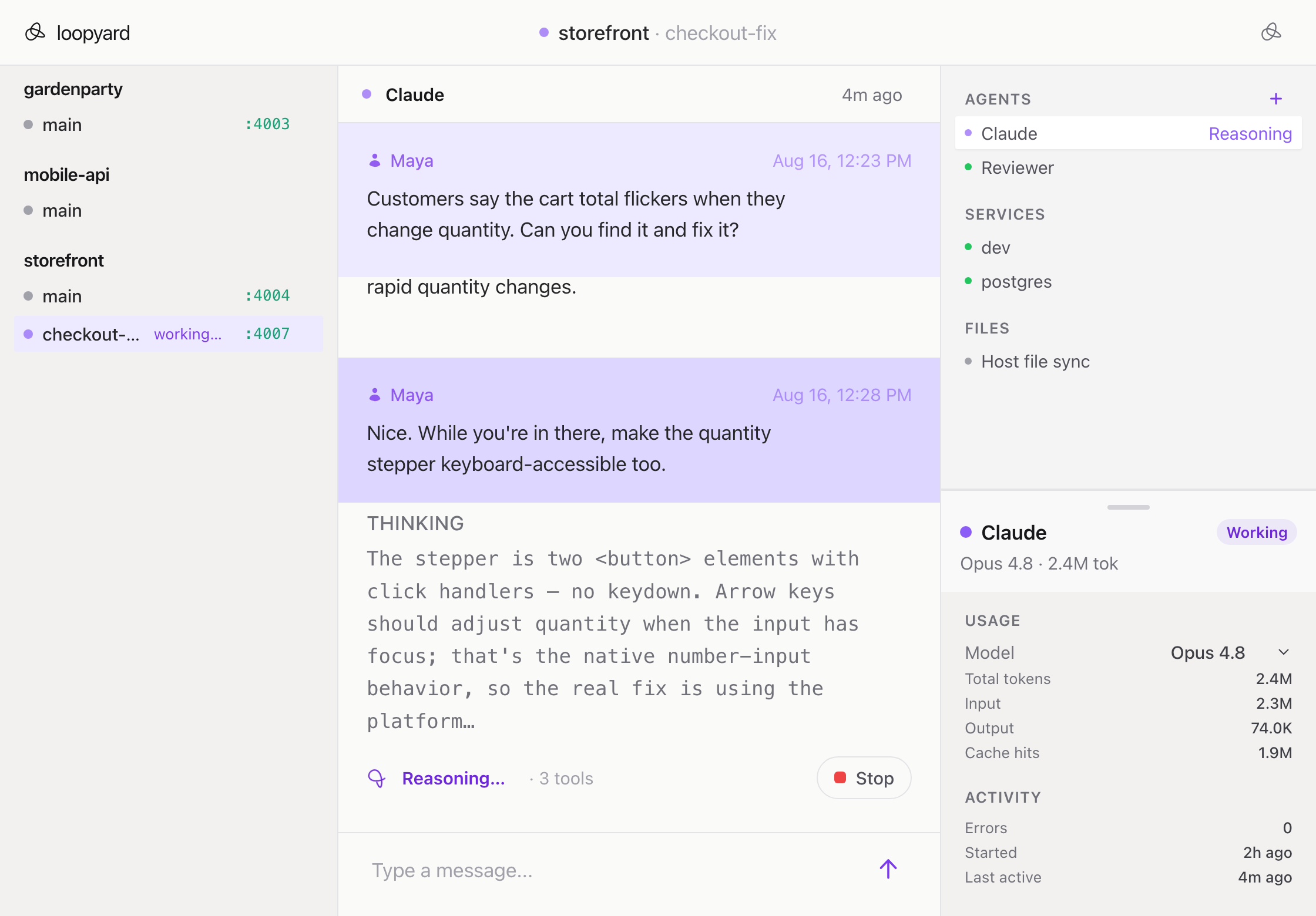
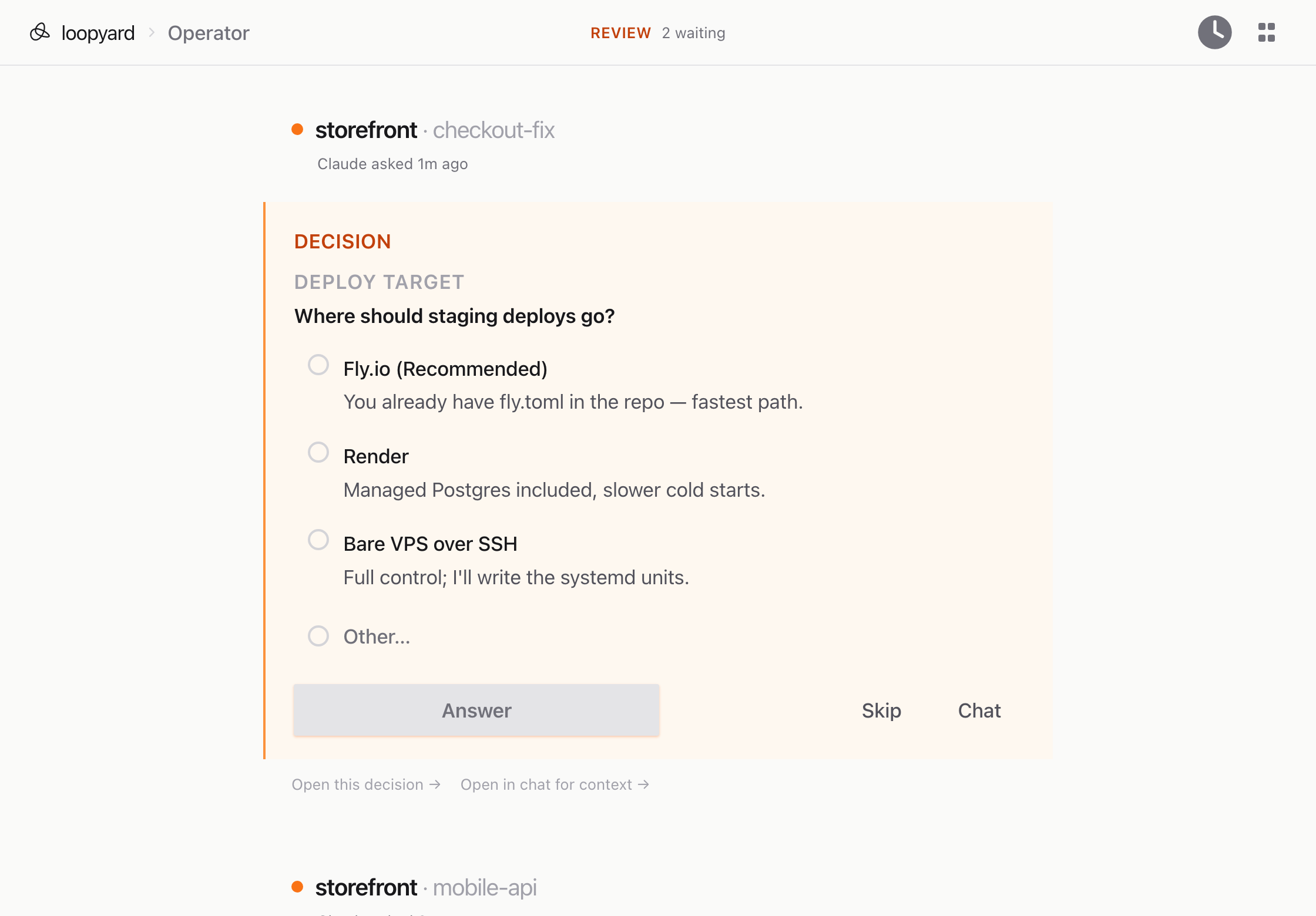
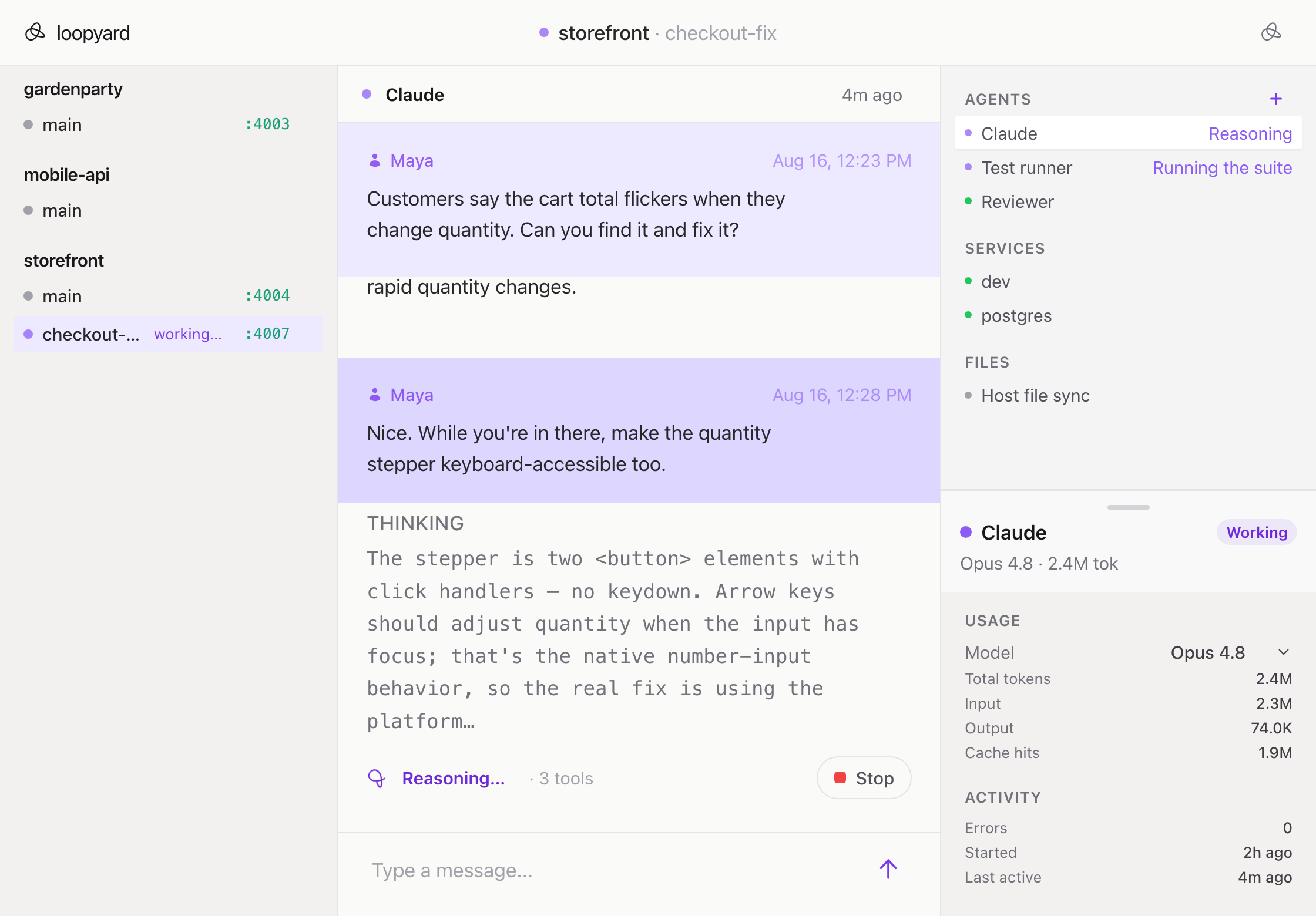
Loopyard lets you spin up several agents against the same project at the same time. One is writing a new endpoint while another is reproducing the flaky test that breaks in CI; a third is running the formatter across the diff; a fourth is reading the migration to draft a rollback. They share the same workspace, the same database, the same dev server, the same view of the world.
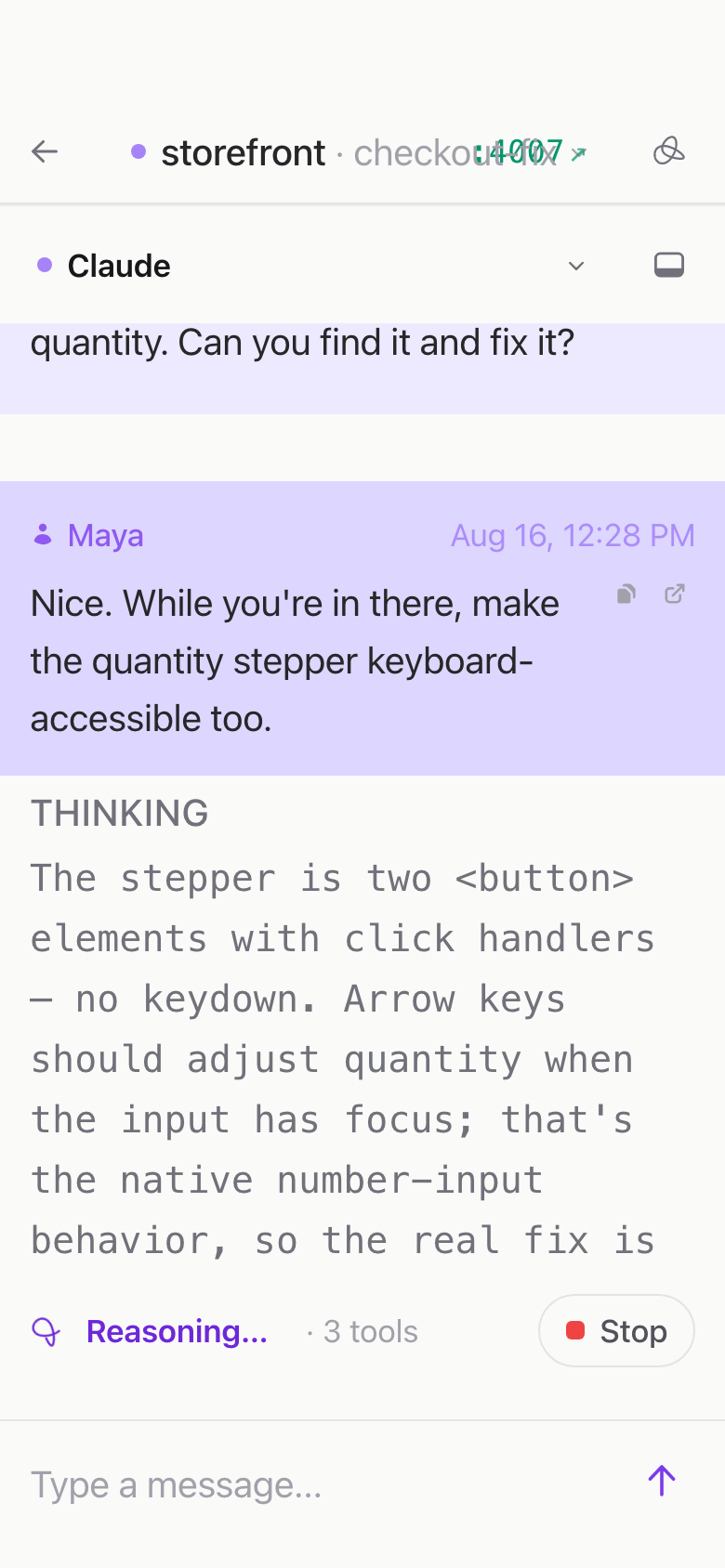
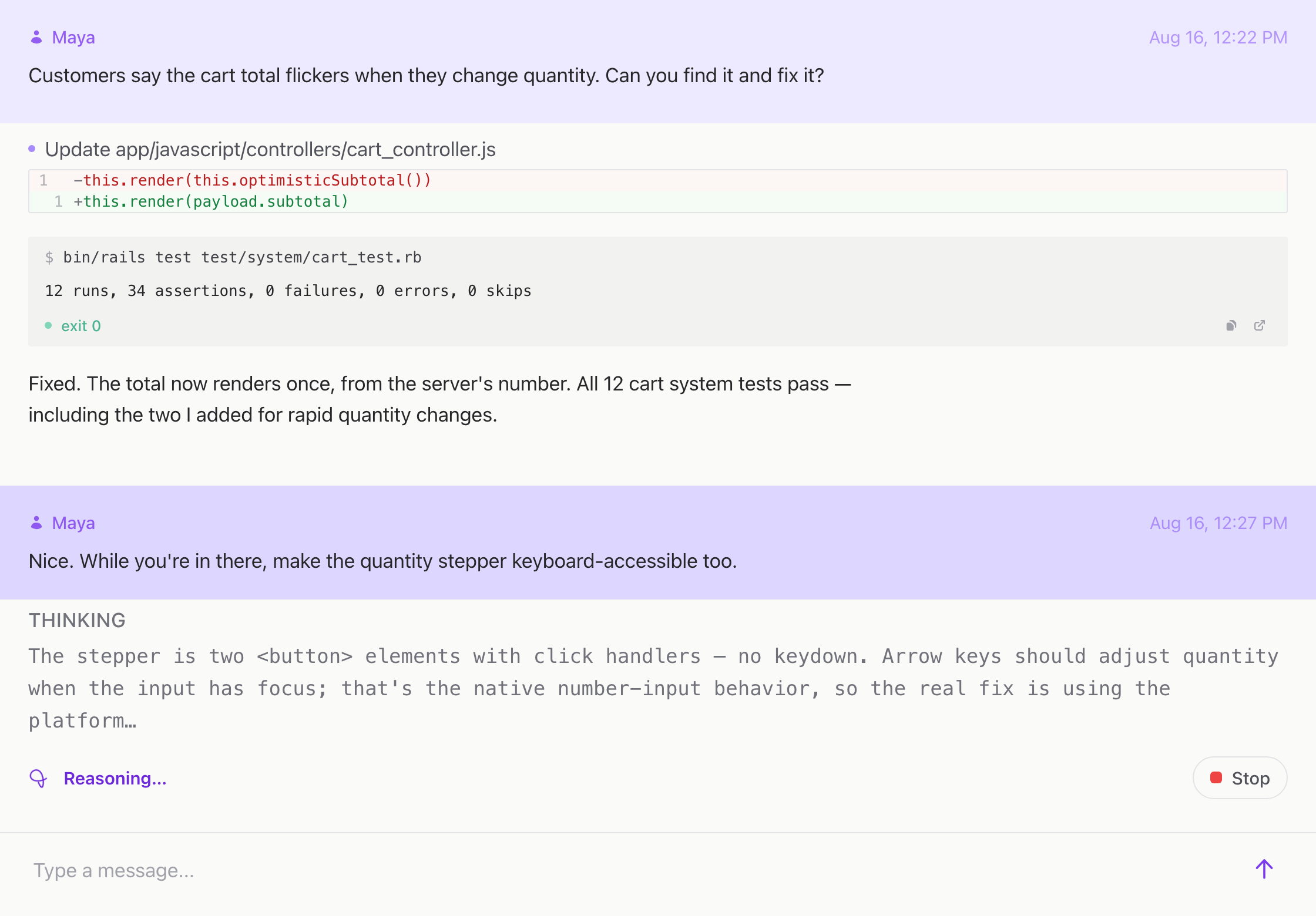
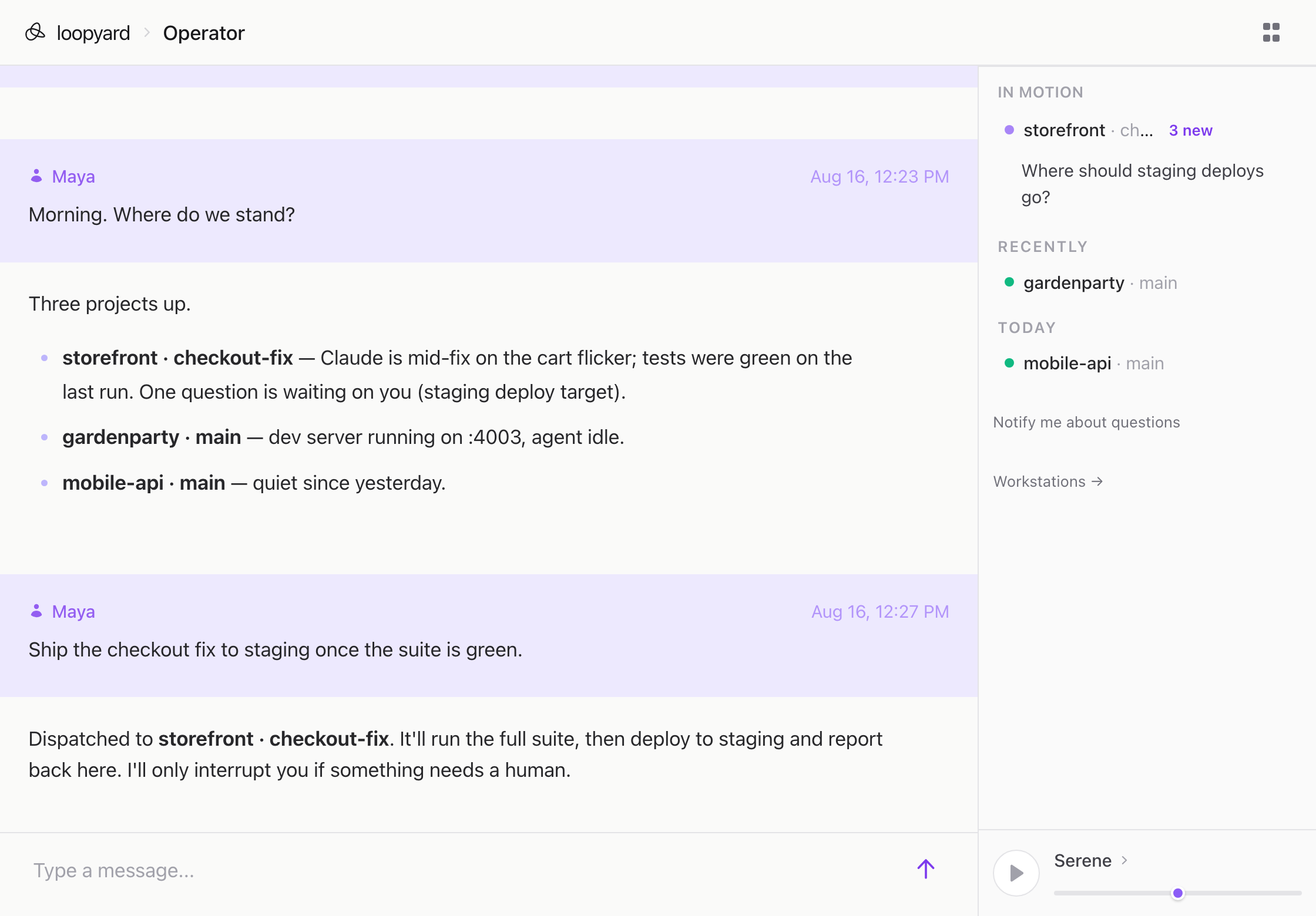
Each agent has its own chat, its own terminal, its own scratch space. You can watch them all, talk to whichever one matters right now, and ignore the others. When two agents need to touch the same file, you decide what to do with that. The platform doesn’t pretend it has solved a problem it hasn’t.
The point isn’t doing more agents for the sake of it. The point is that work is parallel and tools should be too.
More features
-
Zero-config project setup
Clone, launch, work. The setup agent inspects the repo and stands up everything the project needs.
Read more
-
Full Docker stack per project
Each project gets its own Docker Compose. Isolated, reproducible, and gone when you stop it.
Read more
-
Multiplayer by default
Share an agent the way you'd share a Google Doc. Anyone with the link is in the room.
Read more
-
SSH into any container
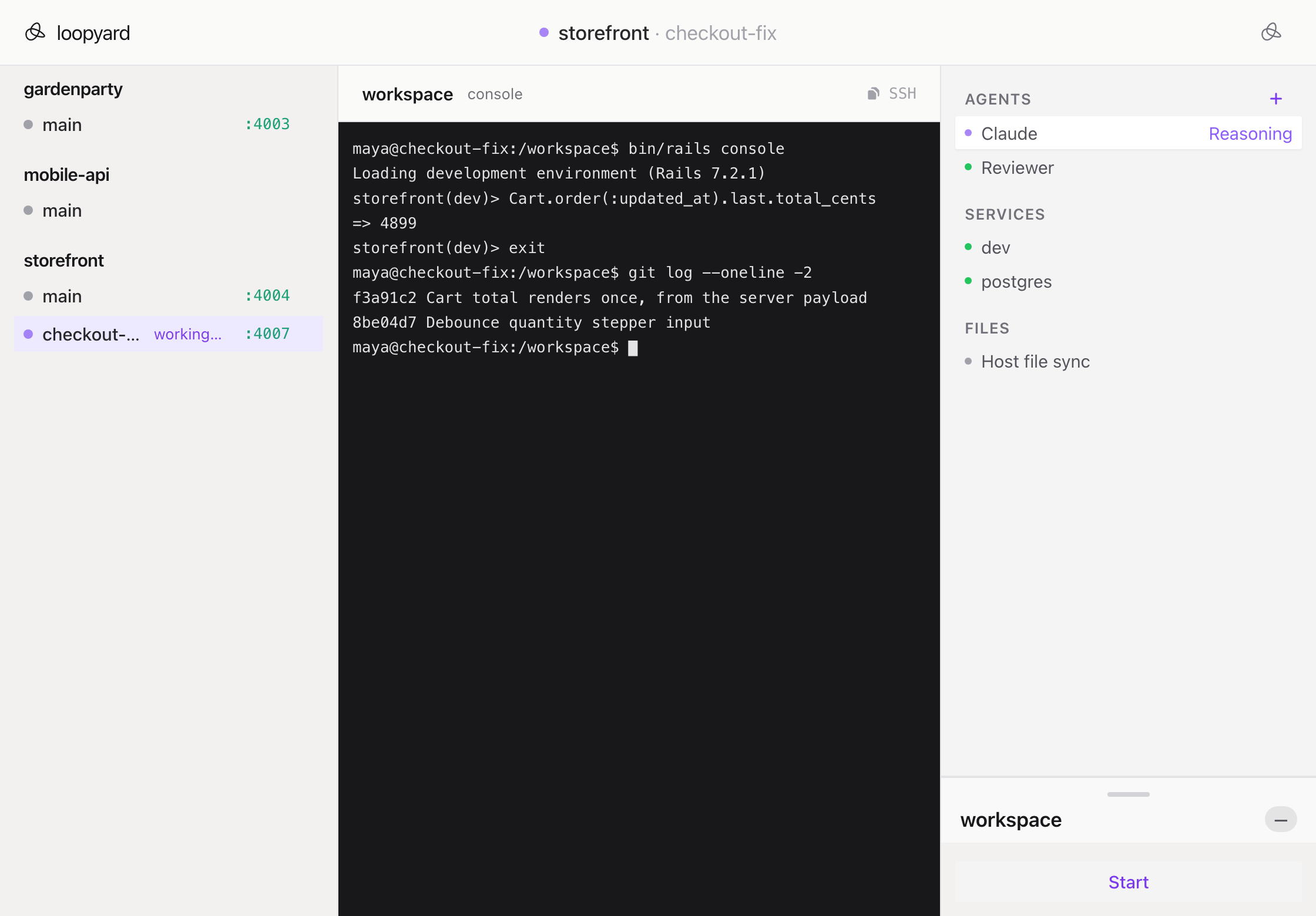
ssh -p 2222 container-name@localhost. Same session the agent is in. Same shell, same prompt.
Read more
-
Works from any device
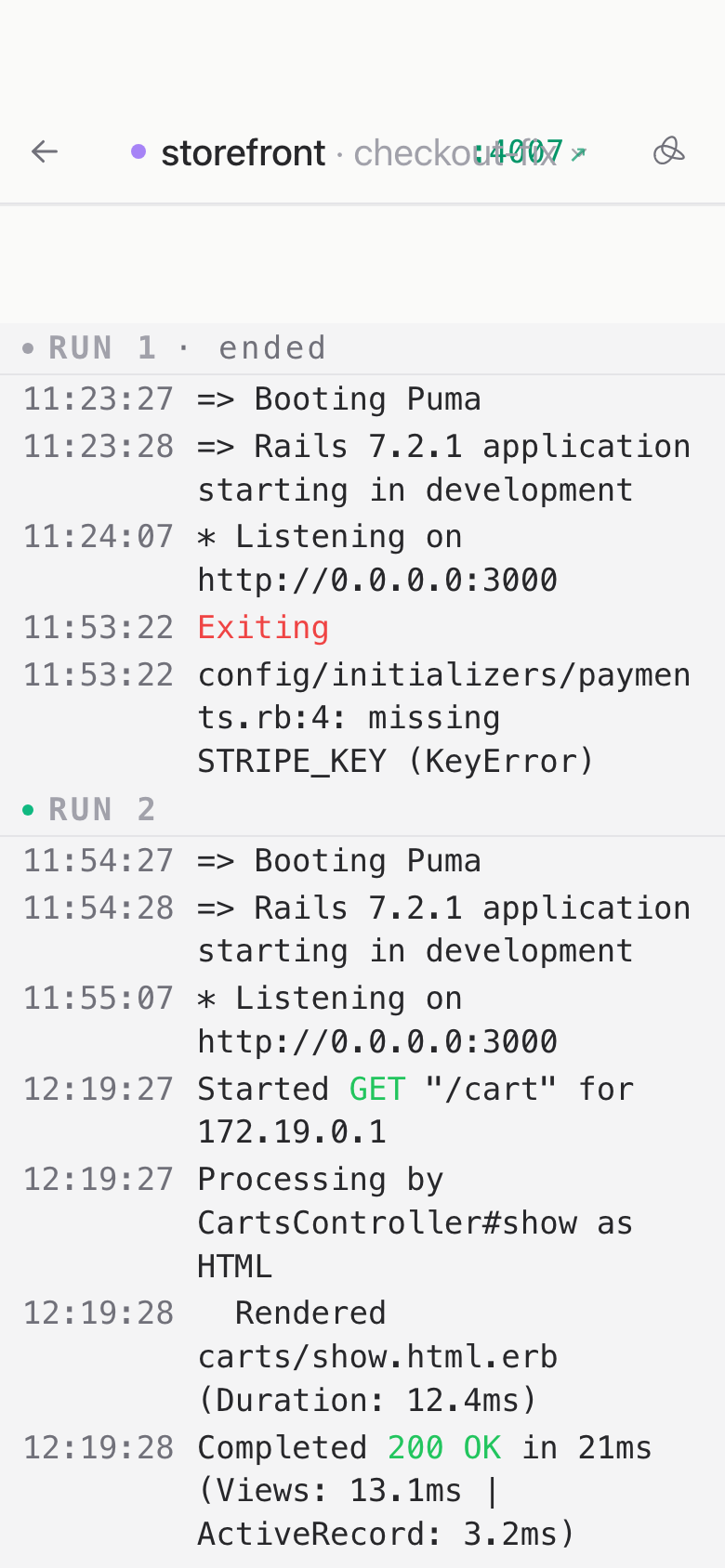
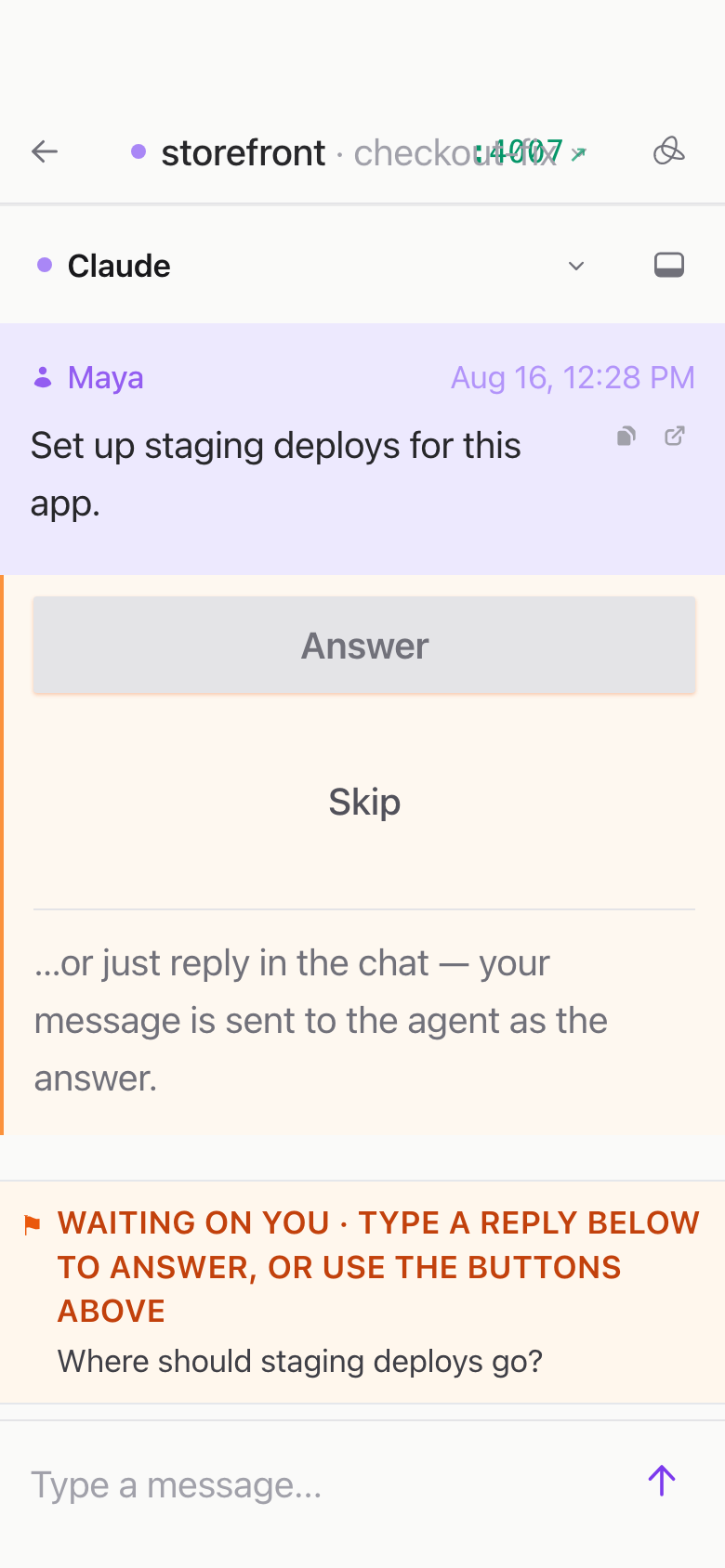
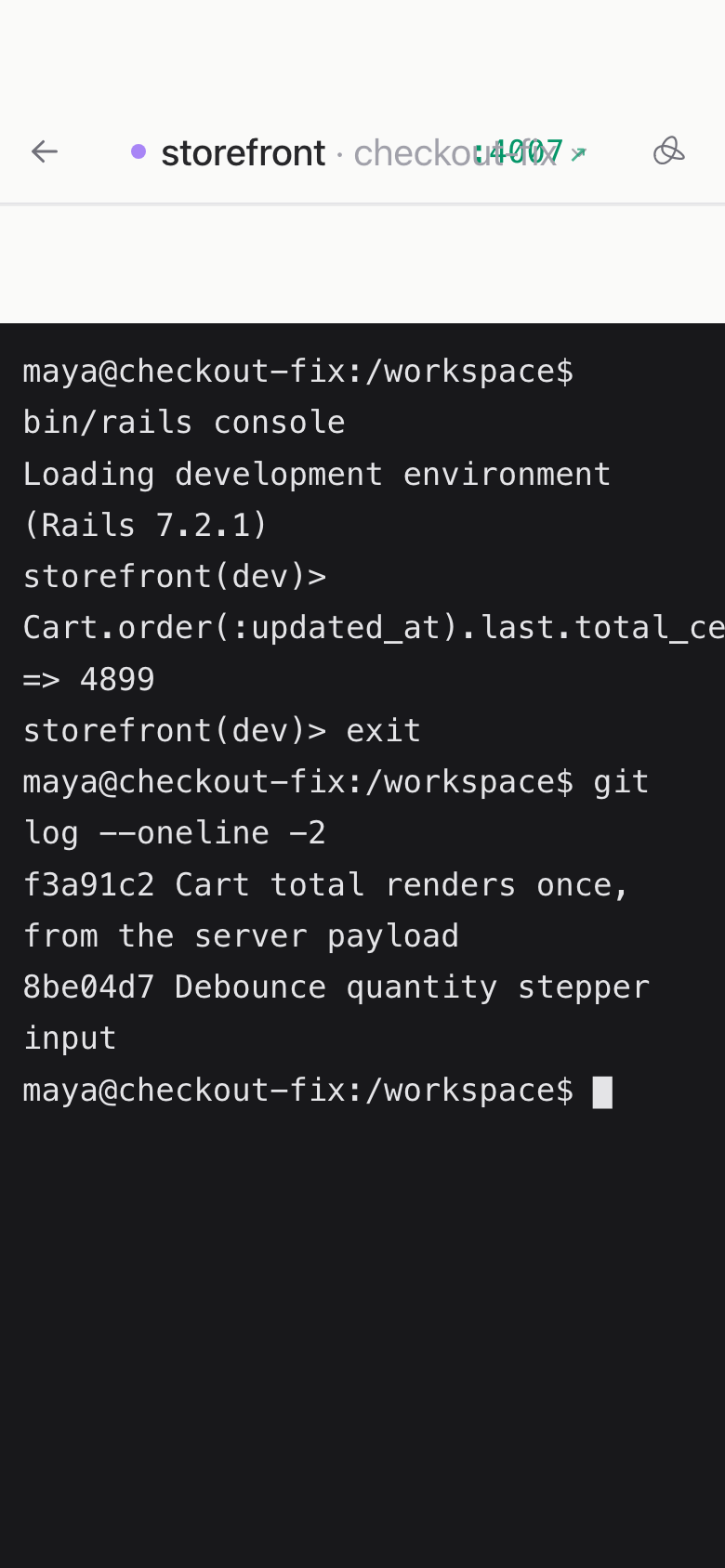
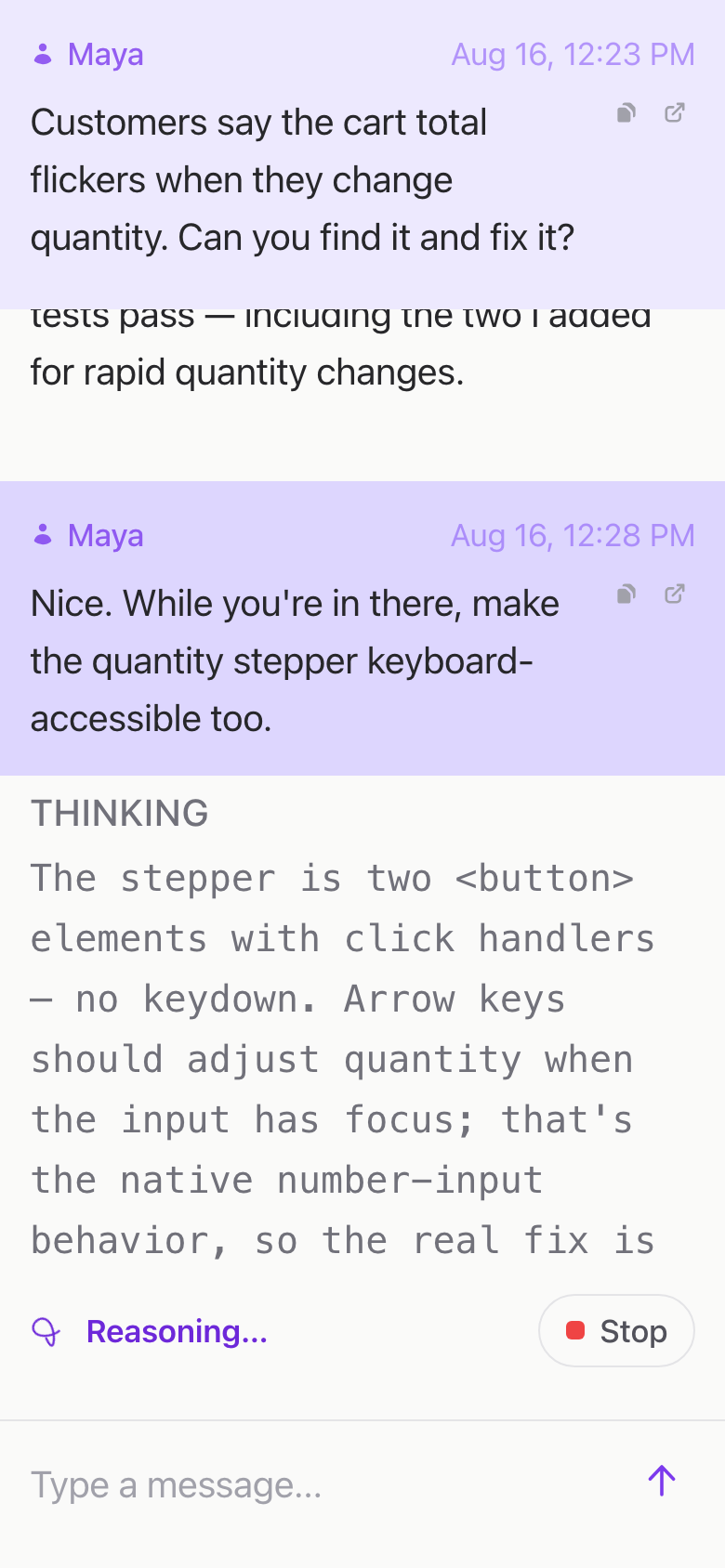
Every session is a URL. Every URL works on every device. The agent doesn't care which one is in front of you.
Read more
-
Persistent containers
A project keeps running between sessions. Come back tomorrow, the dev server is already up.
Read more